Mashkoor Raza
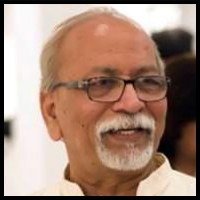
Mashkoor Raza A graduate and a gold medalist from Karachi School of Art in 1972, During the last 20 years or so, he has figured prominently in the art world of Pakistan not only because he is one of the most prolific impressionist and abstract artist in Pakistan. From the beginning, his work has been, more roughly brushed in and richly coloured. Even in till 1980, his style had not fully matured but was working towards it. In the work which he exhibited in a solo exhibition in June 1980, his paintings showed what looked like piles of rough round stones, closely bunched together, with some bigger slabs or blocks, above and below them, and empty spaces in the surrounding picture area. By 1991, he was freely turning out paintings of horses in all conceivable positions, running, rearing, prancing and so on. While he has also experimented with calligraphy, he is primarily known for his excellence in impressionist and abstract art. His style has found maturity over a period of time. His art enjoys rare distinction in the world of art for the rough layers and surfaces eminent in his works. He is commonly known as the Master of Distorted Art in the local art circles.
A. Q. Arif
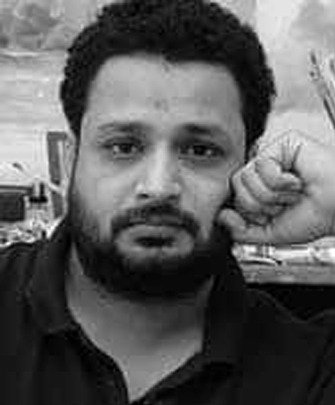
A.Q. Arif is a distinguished Pakistani artist whose breathtaking paintings effortlessly blend history, architecture, and nature. Known for his serene and dreamlike landscapes, Arif’s work invites viewers to explore a world where reality and fantasy coexist in perfect harmony. His artistic focus revolves around the grandeur of Mughal architecture, rural landscapes, and the beauty of historical structures, all captured through earthy tones and the shades of the night sky. These elements convey his deep connection to nature and the soulful essence of his homeland. Arif’s artistic journey began at a young age, and after completing his fine arts degree from the Karachi School of Art in 1996, he quickly established himself in the art world. His works have been showcased in numerous solo and group exhibitions, both in Pakistan and abroad, gaining international acclaim. Arif’s distinctive style, characterized by the use of minimal colors and tones, has made his paintings highly sought after by collectors. With accolades such as the Presidential Award for Pride of Performance and the International Best Artist Award, his art continues to captivate audiences worldwide. For those looking to explore AQ Arif’s incredible body of work, his paintings are available at Clifton Art Gallery, Karachi. The gallery proudly showcases his masterpieces, and visitors can inquire about AQ Arif paintings for sale, with detailed price lists available. Whether you’re searching for AQ Arif paintings in Pakistan or internationally, his works remain a timeless investment for art enthusiasts, and Clifton Art Gallery is the perfect place to acquire a piece of this extraordinary artist’s legacy.

Abdul Rehman
Abdul Rehman (AB), born 1995, is a visual artist and educator based in Lahore, Pakistan. After a successful training of traditional techniques from the Naqsh School of Arts, Rehman pursued his BFA (Visual Arts) from Beaconhouse National University in 2020. He was awarded a fully scholarship and secured a distinction, uplifting his academic credibility and professional career. The artist’s notable achievements encompass showcasing at esteemed exhibitions and having work featured in significant publications such as the International Watercolours Society Biennale in 2017 and 2018. Notably, participation in the Young Artists’ Association of Punjab from 2015 to 2019 underlines his dedication. His innovative QR code- themed artworks were showcased in Art Arcane 2019 and are now part of the permanent collection at ‘Ambiance Boutique Art Hotels. He exhibited at Art Space Lahore 2021, ‘O Art Space with the theme ‘DAR-AAMAD” in Lahore 2022, and the Pakistan Art Forum’s event titled “The New Past”. Additionally, he was featured at ‘VM Art Gallery’ under the theme Welcome to the Here- After in 2022, commemorating Pakistan’s 76th anniversary with ‘Identity-ll at liaz Art Gallery Lahore. His involvement in Beaconhouse National University’s ‘Co- exist’ initiative highlighted his commitment to nurturing student creativity. Collaborating with 0 Art Space Gallery Lahore, he raised funds for flood survivors through ‘Art for Humanity’, and he also curated a notable NFT show with ‘The Upside Space’. Further, he organized a solo exhibition titled ‘Back to the Future’ in Pakistan Art Forum Lahore in 2023 and contributed to ‘Mankind’, a recent show at The Canvas Gallery, Karachi, 2023. His latest show includes a 4-day festival titled Metaverse Bodies’ at BNU. His recent work was displayed at Artescape Gallery, at the exhibition titled ‘Lolita’ and ‘School of Tomorrow’ at PNCA where his futuristic representations were displayed titled, ‘What The Duck & Mickey’s Manic Mania. Recently, AB displayed his work at (Design Summit DS-1) based on Lahore Fort’s futuristic sentinels. AB show also displayed at Pakistan Art Form named ‘Pakistan 3.0’, an amalgamation of past and future perspectives in Pakistan. He articipated in a group show at Dastaan-Goi titled ‘A personal portal’.He also display work at ‘Haryali - An art exhibition’ focusing on Denamark and Pakistan’s relation with Denmark. He recently did a group show at Canvas art gallery at karachi with the title of ‘4 voices’. He is also display work in a collateral exhibition with the NCA Trienniale at Muse Art Gallery. AB’s recently Exhibited a Solo Show at ‘Pakistan Art Forum’ under the Title of ‘Augmented A-Listed Legends Rebooted’. He currently holds a senior lecturer position at Beaconhouse National University, Lahore. “Bridging the gap between the past and the future, my practice depicts the merging of technological advancements (AR and VR) and still art. I have been successful in creating an artistic dimension where my paintings through the use of Augmented Reality, portray my ideas in action, brought to life, right in front of the human eye. Keeping historical hallmarks and figures as inspirations, my pivotal focus lies on multiculturalism, religion, and ancient civilizations, including the Egyptians and the Greek. My art has included famous statues combined with unique futuristic perspectives depicted through paintings embedded with Augmented and Virtual Reality. Another area of my focus includes cartoon characters and games. The main purpose of my paintings is to invoke an imaginative escape for my audience, primarily the recognition and feeling of the unknown. Merging paintings with AR & VR has enabled me to create and entirety of new and enticing concepts brought to life through rapidly advancing technology.”
Abdullah Qureshi
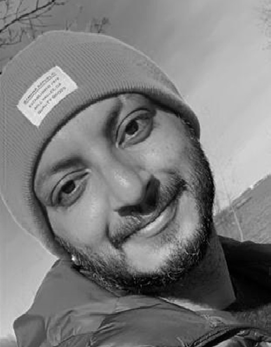
Abdullah Qureshi (b. 1987, Lahore) is a multidisciplinary artist, curator, and educator. Rooted in traditions of abstraction, he incorporates gestural poetic, and hybrid methodologies to address autobiography, frauma, and sexuality through pointing, filmmaking, and immersive events. Drawing from childhood memories, everyday surroundings, and intimate encounters, interior objects, abstract landscapes, and faceless portraits are recurring themes in his paintings. In moving image and durational projects, Qureshi situates artistic concerns from the personal into more expansive conversations on critical histories, visual culture, and social justice. His flims fake a camp performance-based approach to portray scenes, symbols. and non-linear narratives that extend his visual language, questions on identity, and queer genealogies outside the Western canon, Qureshi's work has been exhibited internationally, including at the National Gallery of Art, Islamabad, Alhamra Art Gallery, Lahore, Rossi & Rossi, London, Berlinische Galerie, Berlin, Twelve Gates Arts, Philadelphia, and SOMArts Cultural Center, San Francisco, He has held numerous positions of cultural and educational institutions, including the British Council Pakistan and the National College of Arts, Lahore. Qureshi has conducted lectures, paper readings, and artist talks around the world, including at the Film and TV School of the Academy of Performing Arts (FAMU), Progue, Ateneum Art Museum, Helsinki, PRAKSIS, Oslo, Residency Unlimited, New York, University of California, Irvine, Valand Academy, Gothenburg, and Fábrica de Arte Cubano, Havana, In 2017, Qureshi received the Art and International Cooperation fellowship at Zurich University of the Arts and, in 2018, a research fellowship at the Center for Arts, Design, and Social Research, Boston. Qureshi is a doctoral candidate at Aalto University in Finland, and will defend his thesis in December 2025. He is currently based in Tichtiake/Montreal, Canada.
Abple
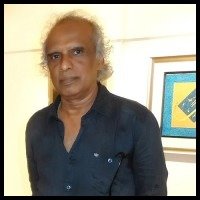
Abrar Ahmed
Abrar Ahmed Viewing the art of Abrar, one shares the enormous enjoyment the artist obviously relishes in the changing moods of colours. A self taught artist in the tradition of Sadequain and Gulgee, Abrar freely delves into the romance of classical miniature painting, and fuses contemporary styles with stunning results. One discovers ethnic patterns, diverse textures and explosions of colours that are breath taking. The artist's subject, a bejeweled and gracefully draped woman, is often the centre of composition that includes a musical instrument or birds for company. Perhaps these cameos refer to the romantic period of the Emperor Jehangir when times were peaceful and lovers- together and apart- appeared to be a favoured subject. Birds- the messengers of Mughal art- are familiars and obviously important to the sinuous forms that dominate the brilliant colouration and powerful textural interest of their settings. One painting in particular that includes a musical instrument has a rhythmic pattern that dances across the surface of the work. Here the linear detail that is important to the artist is much in evidence. In the centre of the canvas the subject is seated on a wall composed of small dark tiles, the pattern intervenes with an exquisite blue vase and bright green leaves. Abrar's work may be interpreted on historical or philosophical levels yet it is also the work of an imaginative min d and a deeply feeling creative individual. The artist related that his work is inspired by Urdu ghazals that are described as a poetic expression of the pain of separation from a loved one; certainly in Abrar's work it appears that every painting is a poem.
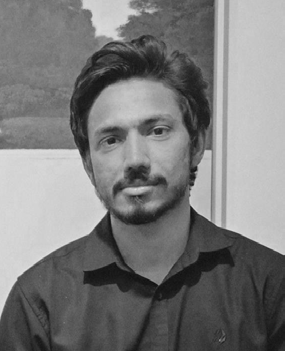
Abu Hanzla
Born in Faisalabad, Pakistan, Abu Hanzla is a contemporary visual artist. He completed his Master’s degree in Visual Arts from the National College of Arts, Lahore, in 2024, and his Bachelor’s degree in Fine Arts from the Institute of Art and Design, Government College University, Faisalabad, in 2019. Hanzla’s work has been exhibited widely at prominent venues, including The Treasure House Fair, London; India Art Fair; Ejaz Art Gallery, Lahore; Alhamra Arts Center, Lahore; Pakistan National Council of the Arts (PNCA), Islamabad; Gallery 6, Islamabad; Tagheer, Lahore; NumaishGah, Lahore; Kaleido Kontemporary, Lahore; Muse Gallery, Lahore; Art Scene Gallery, Karachi; and Reservoir Gallery. In 2021 he was selected for The First Step Residency Programe in Dubai. In 2024, he was awarded the prestigious Charles Wallace Grant to attend a Traditional Arts programe at the School of Traditional Arts, London. My work emerges from the friction between land and power, nature and control. I am drawn to the subtle and violent ways in which landscapes are shaped not only by climate and time, but also by political agendas, urban development, and economic desire. My work does not seek to romanticize nature; rather, it questions how we see, use, and curate it. I engage with landscapes as contested texts archives of power, resistance, memory, and erasure. In doing so, I aim to create spaces where the political and the poetic intersect, allowing the viewer to reflect on their own position within the ecology of land and belonging.

Adil Masood Qazi
Adil Masood Qazi is a distinguished mixed media artist, designer, and educator with over three decades of professional experience. He graduated with distinction from the prestigious National College of Arts (NCA) in 1990, laying a foundational mastery that bridges traditional art and modern design principles. Over the past 30 years, Qazi has balanced a rigorous studio practice with a dedicated career in academia. He currently serves as an Assistant Professor in the Department of Design and Textiles at a leading local university, where he channels his extensive industry insight into mentoring the next generation of creative professionals. His multidisciplinary approach reflects a seamless harmony between artistic expression, material exploration, and design theory. “My artistic practice is guided not by rigid permanence, but by the precise, fleeting resonance of the present moment. I am drawn to experimental subjects and unconventional mediums because they possess a raw unpredictability that mirrors the shifting nature of thought and instinct. For me, a piece of art is an archival record of a specific point in time a creative response to what compels me in that exact instance. By rejecting static boundaries and embracing the unexpected qualities of diverse materials, I allow the work to dictate its own form. This philosophy ensures that my art remains an active, evolving dialogue between the immediacy of intuition, the exploration of the unfamiliar, and the physical reality of the medium.”

Adnan Javed Samuel
Adnan Javed Samuel is a self-taught visual artist, educator, and co-curator with Studio Augustine based in Lahore, Pakistan, with over 30 years of experience in art education and creative practice. He has been serving as an Art Instructor at Cathedral School, where he has mentored and inspired generations of young artists. Many of his former students have gone on to study at prestigious institutions nationally and internationally, and today they are making significant contributions to Pakistan’s art and creative industries. Alongside his teaching career, Adnan Javed has held solo and group exhibitions, curated major art projects, worked as an illustrator, designer, photographer, and art director, and collaborated with leading cultural institutions across Pakistan. His artistic practice explores human relationships, emotion, and conceptual narratives through mixed-media works, reflecting his lifelong commitment to art, education, and creative excellence. “I am a self-taught artist working in mixed media, drawn to the invisible dynamics that shape human connection. My work explores the emotional atmosphere of relationships the quiet tensions, pauses, misunderstandings, and moments of vulnerability that often pass unspoken but are deeply felt. Through layered textures, recurring forms, and abstract compositions, I attempt to capture the emotional weight of conversations not the words themselves, but the silences between them. Shapes, lines, and dots form the foundation of my visual language. They function as emotional symbols signaling proximity or distance, pressure or ease, conflict or resolution. Each piece becomes a kind of emotional mapping: the strain of trying to be understood, the weight of what goes unsaid, the fragility of closeness. The layered surfaces reflect the complexity we carry how we build, obscure, and protect the parts of ourselves we choose to share. Rather than narrate, my work invites viewers to feel to tune into the emotional residue left by interaction, to recognize the subtle push and pull within their own relationships, and to sense the endurance it takes to stay connected.

Ahmed Khan
Ahmed Khan is thought of as Pakistan's greatest living calligraphic artist. His work comprises overlaid calligraphic designs based on silver foil pressed on canvas which with a sprinkle of chemicals turns them into vibrant colours. His calligraphic forms are meticulously applied on this base. Ahmed Khan's renditions spark with spirituality. It is the oneness of God and a matter of peace which takes place on his canvases. At every exhibition he comes up with new compositions. One finds ovals, circles and semi circles with splashes of mystifying light creating an impression close to what Khan is going through metaphysically. Another obvious symbol on his canvases is a seal. This small motif in various colours as per requirement of color aesthete adds beauty as well as sanctity to the paintings. Earlier, in his talks the stress was on the color and technicalities of his paintings. With passing years, he tends more towards philosophizing upon metaphysical element in his work. Besides his concept, Khan's compositions, his lettering and colours appeal to the eye and render a value for the future.

Ahsan Abdullah
Ahsan was born on 24 June 1996 in Lahore. After his matriculation and intermediate, he earned his bachelor's degree in fine arts from the institute for Arts & Culture, Lahore in with his major in painting. He is currently doing his self-practice and working in Lahore as a Visual Artist, hip-hop Artist, Performer, and art director as well as a freelancer on different private projects.

Aina Merzia
Aina Merzia (b. 2001, Rawalpindi) is a contemporary miniature artist and a graduate of Rawalpindi Women University, where she completed her BFA in Fine Arts with a specialization in Miniature Painting (2020–2024). Her artistic journey began with independent drawing practice in 2016 and has since evolved through rigorous academic training and active engagement with Pakistan’s vibrant art scene. Her work has been featured in several notable group exhibitions, including Art Exhibition 2024, Pakistan’s Emerging Art 2024, VM 20th Emerging Talent 2025, Artfest Karachi 2025 – Gravity and Beyond Façade: Exploring Contemporary Pakistani Perspectives, Alhamra Young Artist Exhibition, Fractured and Fluid at Kelaido Kontemporary, Soch Say Saqafat Tak at Khayal Art Space, and Broadcast Vol. II at O Art Space. Currently, Aina serves as a lecturer at the University of Rawalpindi, where she continues to explore, create, and inspire through her practice. Alongside her academic role, she is developing a new body of work aimed for gallery display, expanding her practice beyond traditional miniature techniques and experimenting with acrylics, mixed media, and larger-scale formats. “In Remission” reflects a state in which a lifelong illness eases its grip, periodically improving or stopping its march toward destruction. This is a reality the artist knows, though her work does not dwell on personal suffering. Instead, it becomes a universal symbol of hope, created for anyone who searches for light in moments of crisis. Remission represents not just relief, but also the profound reminder that illness, like hardship, is not constant. Even brief periods of stability offer a sense of control and the will to live more fully within them. Whether it’s the jagged line of a fish spine evoking destruction, or carnations blooming as flesh made of creation, whether transparent forms or anatomical entities, every element embodies this state. In Remission is not merely an escape from pain, but an affirmation that even in fragility, there is space for beauty, reprieve, and hope.

Aleena Ahmed
Aleena Ahmed is a visual artist and creative design professional whose work often explores themes of presence, absence, and spiritual intimacy

Ali Hamza
"Biography" Ali Hamza, born in November 1996 is a multidisciplinary artist currently residing in Lahore. He earned his bachelor's degree in fine arts with distinction specializing in painting along with ceramics, sculpture and music from the prestigious National College of Arts, Lahore in 2021. He has been the part and director of theater at NCA's theater society "Skits". Ali is a skilled painter along with having a deep and strong interest in sculpture, music and dramatics. His works capture the actions in a very unique abstract way. His works have been a part of group shows like "REAL and it's DOUBLE" at Embassy of France, Islamabad (2018). Group show "BROADCAST VOL 2" at O Art Space, Lahore (2021) Group show "THE NEW ODYSSEY" at Pakistan National council of Arts (PNCA) (2021). "SIMPLE THINGS" at Shakir Ali Museum, Lahore. (2022). "Anna Molka Award Show" at PUCAD (2022) along with some virtual exhibitions. Ali's work has been published on the cover page of UK based magazine "LAZIN". He has also worked for the Agha Khan Historic Cities Program (AKHCP) for a short period.. His works have been in numerous private collections locally and internationally.

Amin Rehman
Amin Rehman is a multidisciplinary visual artist who has been working since the 1980s. Rehman’s interests are primarily drawn from his experience of living in Pakistan and Canada. His work engages with and comments on the current effects of neo-colonialism and globalization, encompassing multiple artistic mediums such as installation, painting, video, and neon. He studied at the National College of Arts (Lahore, PK), the University of Manchester (UK), and the University of Windsor (CA). Rehman has exhibited extensively in exhibitions and festivals across the globe. Recent exhibitions and awards include: War of Narratives, First NCA Triennale, Lahore, Pakistan (2025), Water Wars, Karachi Biennial, Pakistan (2022); and Bleeding Borders at Zahoor ul Akhlaq Gallery, National College of Arts Gallery, Lahore (2025) with multiple grants from Canada for Arts, Ontario Arts Council, and Toronto Arts Council grants awarded between 2008 and 2024. Rehman was the recipient of the Chalmers Fellowship Award in 2008 and 2017, and the British Council Fellowship in 1987. Through my art practice, I have continually investigated and questioned themes of violence, conflict, war, and peace to highlight the complexities of cultural globalization as an ideology of security. In using a range of artistic interventions, I attempt to highlight issues of post-colonialism, alongside the aggressive capitalism, which manifests itself as a floating signifier of world order and peace. Expanding on these ideas, my body of work utilizes the graphic and informational qualities of print media and the aesthetic design elements of Pop Art. It speaks to the current ‘branding’ of global issues across the internet and traditional media platforms. The War of Narrative is an ongoing theme of my tile works since 9/11. These open-ended texts, small encaustic tiles, such as They Lied to Us Every Time (Image #1, 2022), State Within a State (Image #2, 2022), Where is Home ( Image #3, 2022), Zero-Sum Thinking (Image #4, 2022), and The State Is The State (Image #5, 2022), trace neocolonial history, the effects of war, global dominance, the structure of internal powers, and cultural interference in these encaustic tiles. These direct and open text selections replace historical text and are symbolic of the cultural invasion experienced in colonized countries like Pakistan and its continuity within internal power structures.Amin Rehman is a multidisciplinary visual artist who has been working since the 1980s. Rehman’s interests are primarily drawn from his experience of living in Pakistan and Canada. His work engages with and comments on the current effects of neo-colonialism and globalization, encompassing multiple artistic mediums such as installation, painting, video, and neon. He studied at the National College of Arts (Lahore, PK), the University of Manchester (UK), and the University of Windsor (CA). Rehman has exhibited extensively in exhibitions and festivals across the globe. Recent exhibitions and awards include: War of Narratives, First NCA Triennale, Lahore, Pakistan (2025), Water Wars, Karachi Biennial, Pakistan (2022); and Bleeding Borders at Zahoor ul Akhlaq Gallery, National College of Arts Gallery, Lahore (2025) with multiple grants from Canada for Arts, Ontario Arts Council, and Toronto Arts Council grants awarded between 2008 and 2024. Rehman was the recipient of the Chalmers Fellowship Award in 2008 and 2017, and the British Council Fellowship in 1987. Through my art practice, I have continually investigated and questioned themes of violence, conflict, war, and peace to highlight the complexities of cultural globalization as an ideology of security. In using a range of artistic interventions, I attempt to highlight issues of post-colonialism, alongside the aggressive capitalism, which manifests itself as a floating signifier of world order and peace. Expanding on these ideas, my body of work utilizes the graphic and informational qualities of print media and the aesthetic design elements of Pop Art. It speaks to the current ‘branding’ of global issues across the internet and traditional media platforms. The War of Narrative is an ongoing theme of my tile works since 9/11. These open-ended texts, small encaustic tiles, such as They Lied to Us Every Time (Image #1, 2022), State Within a State (Image #2, 2022), Where is Home ( Image #3, 2022), Zero-Sum Thinking (Image #4, 2022), and The State Is The State (Image #5, 2022), trace neocolonial history, the effects of war, global dominance, the structure of internal powers, and cultural interference in these encaustic tiles. These direct and open text selections replace historical text and are symbolic of the cultural invasion experienced in colonized countries like Pakistan and its continuity within internal power structures.

Anas Abro
Anas Abro (b. 1993) is a Visual Artist based in Hyderabad, Pakistan, Graduated from Centre of Excellence in Arts and Design, MUET Jamshoro, Sindh in 2016 with a major in Painting. He also learnt Restoration of oil paintings and Graphic design. Abro has displayed his works nationally and internationally in various Art galleries including, The Line Contemporary Art Space in London, ITMondo Spain, Gallery 6, AQS gallery and My Artworld in Islamabad. VM Art gallery, Artchowk, Spaces, Karachi Arts Council, Full circle, Artscene ,Artciti Gallery in Karachi. Ejaz Art Gallery, Alhamra Arts Council in Lahore. Zafar Kazmi Art Gallery, Sindh Museum, Hyderabad an d AR Nagori Art Gallery, CEAD,MUEt, Jamshoro and he was selected for The Mauritius international Art fair in 2019. Anas has also been one of selected artists for BQ Studio 2nd Artist Residency program in 2016 Lahore and displayed the work in two group shows titled “24x7” at Saeed Akhter Studio, Lahore and Satrang Art gallery (Serena Hotel) Islamabad. His work has been published in Nigaah Magazine, Karachi Collecta Art magazine, Miami and Youline magazine. Currently Abro is practicing Art and teaches Drawing and Painting at his own Anas Abro Studio in Hyderabad, Pakistan.
Anujath Sindhu Vinaylal

Aqeel Solangi
Aqeel Solangi was born in Ranipur, Sindh. He graduated with honours from the prestigious National College of Arts, Lahore in 2003 with a major in Painting, followed by his first Masters degree MA (Hons.) Visual Art in 2005. He received his second Masters degree MA Fine Art (pass with merit) from the Bath School of Art and Design - Bath Spa University, UK in 2016. He was the recipient of the renowned International Charles Wallace Pakistan Trust Visiting Artist Fellowship for the King’s Foundation, School of Traditional Arts, London in 2006. Since then, he has been teaching at the National College of Arts, Rawalpindi, currently as an Associate Professor and Head of the Painting and Sculpture departments. Solangi’s work has been showcased in Pakistan and internationally. He was part of the 2013 Pakistani Artists’ workshop in China. Solangi has received ‘A Vision of the Future-2006’ Young Artists Award by the Lahore Arts Council in 2006. Major survey of his work was exhibited at the Chawkandi Art in 2019, that was accompanied the publication ‘Fictional Homelands’. His work has been reviewed by Dr. Michele Whiting, Dr. Akbar Naqvi, Aasim Akhtar, Marjorie Husain, Nafisa Rizvi, Salwat Ali, Noor Jehan Mecklai and Sally Bennett. He has worked as sign and cinema board painter at Mehboob Painters in Khairpur (Mir’s), and also attended extensive art courses at an early stage of his career at renowned artist Mussarat Mirza’s studio in Sukkur, Sindh. Aqeel Solangi lives and works in Rawalpindi. I have produced two works for the exhibition ‘A Square of Silence’ titled: Fading Field and Silence Between Two Halves. The word field holds the repetition, it could be a garden or a visual field. The gradient red in the background gradually covers the Periwinkles, there sense of time can be witnessed. The field usually suggests openness, vastness even expansion, here it is contained within a circle, that is sort of a contradiction, I think that also makes the work more interesting. In the ‘Silence Between Two Halves’, there is a hint of Yin Yang that, complementary forces yet interconnected energies that balance the universe.

Aqiq Ehsan
Aqiq Ehsan is a Lahore-based landscape artist whose practice is defined by a strong command of oil painting and a deep sensitivity to the natural environment. His work reflects a careful observation of light, atmosphere, and spatial depth, allowing him to translate the changing moods of landscapes onto canvas with remarkable clarity and precision. Ehsan’s paintings often depict serene vistas ranging from lush greenery and rural terrains to expansive skies and tranquil waters—rendered with a meticulous attention to detail. His use of vibrant yet harmonious color palettes enhances the emotional resonance of his scenes, while his controlled brushwork lends a sense of structure and refinement to each composition. Through subtle gradations of light and shadow, he captures the transient qualities of nature, creating immersive environments that invite prolonged contemplation. Rooted in traditional oil painting techniques, his process involves a gradual building of layers, enabling him to achieve depth, texture, and luminosity within his work. This disciplined approach not only highlights his technical proficiency but also underscores his commitment to craftsmanship. Beyond their visual appeal, Ehsan’s landscapes evoke a sense of calm and introspection, offering viewers a momentary escape into quiet, unspoiled settings. His work contributes to the continued evolution of contemporary Pakistani landscape painting, bridging classical techniques with a modern sensibility. Widely appreciated for their aesthetic and collectible value, his paintings are part of private collections and are exhibited through galleries, including Art Bliss Gallery, where they reach a diverse audience of art enthusiasts and collectors.

Arfan Javed Augustine
Arfan Javed-Augustine is a remarkable visual artist, educator, and independent curator with an outstanding career spanning more than two decades. Currently serving as a faculty member at the Institution of Design and Visual Arts, Lahore College for Women University, since 2006, Arfan has established himself as a leading figure in Pakistan’s art scene. Arfan’s academic credentials include a BFA with honours and an M.A. (Hons.) in Visual Art with distinction from the National College of Arts, Lahore. He further honed his skills as an exchange student at the prestigious École Nationale Supérieure des Beaux-Arts, Paris, France. Throughout his career, Arfan has attended numerous workshops and earned various certifications, including printmaking workshops with Swedish artists at Global Arts Village, Dervish Dance, and colour therapy courses in New Delhi, India. Arfan’s artistic achievements have been recognised nationally and internationally, with six solo exhibitions and numerous group exhibitions in countries such as France, Canada, and India. He has received several awards and grants, including the Student Exchange Scholarship for École Nationale Supérieure des Beaux-Arts in Paris and a residency grant from the Foundation TenotCAMAC Centre d’Art Marnay Art Centre, France. As an educator, Arfan has mentored numerous students, serving as a thesis advisor, coordinator, and supervisor for MS and BS studio practice students. He has curated several art exhibitions, both within and outside the institute, which have attracted large audiences and garnered critical acclaim. His students’ thesis displays have been highly appreciated by faculty and visitors alike. Arfan’s expertise has also been recognised through his roles as a juror at prestigious institutions, including the National College of Arts, Art & Design PU, Kinnaird College, and Faisalabad University. He has supervised numerous NCA students working towards their MA (Hons.) in Visual Arts and participated as a jury member in various art competitions at leading Lahore institutions. Through his multifaceted career, Arfan Javed-Augustine has demonstrated a commitment to artistic excellence, education, and community engagement, inspiring a new generation of artists and art enthusiasts in Pakistan and beyond. “In this series, I weave a tender narrative of emergence and interconnectedness, where water’s gentle flow, the warmth of sunlight, and the subtle dance of temperature become the whispers of life’s profound symphony. Like a seed cradled in the fertile depths of human experience, we find ourselves sprouting in the nurturing embrace of connection, each relationship a ripple that stirs our roots and fuels our ascent toward light. This body of work serves as a reflective canvas, inviting viewers into a meditation on growth as a collective act. Our spirits reach and stretch a testament to resilience and hope as our roots intertwine with others’ stories, struggles, and joys. In this intricate web of shared humanity, we discover meaning, solace, and the courage to evolve amid the shifting climate of our world and relationships alike. Through these artworks, you are beckoned to wander into a personal garden where moments of tenderness, catalysts of change, and the vital warmth of community coalesce. May this work serve as a gentle reminder of the fragile yet resilient balance between environment, self, and collective growth. It celebrates the sacred alchemy that occurs in moments of vulnerability and connection, revealing that in these delicate exchanges, we find the luminous potential to flourish amid uncertainty and change. This body of work also explores growth, human connection, and resilience through the metaphor of a seed. A word, like a seed, needs nurturing ground to take root and bear fruit. Every utterance holds creative power; it can shape attitudes, behaviours, and even the course of societies. Rooted in the Urdu concept of the Word manifesting in tangible form, Tajasim Kalma examines how words, once spoken, take root in hearts and social soil to shape our shared reality.

As Rind
A.S.Rind is a Karachi based artist whose art is in demand throughout the country. His work has frequently been shown in exhibitions shown abroad and he has a number of solo exhibitions to his credit. Inspired by the poetry of the masters; Ghalib, Faiz Ahmed Faiz and Alama Iqbal. Rind illustrates his thoughts with portraiture portraying delicate female forms in colourful traditional dress and jewellery and classic symbols creating a narrative often accompanied by the poets text. Rind is a versatile artist who graduated from CIAC(Central Institute of Art and Craft) in 1988.He was at that time a super-realist painter who continued to study art and to explore contemporary styles of painting. He went on to practice calligraphy, illustrating historic architecture. Rind found his unique personal idiom in the new millennium by fusing moods and styles with great success using oil or acrylic as his media. The pictorial richness of the artist’s work is enhanced by his understanding of line, form and colour.

Ashkal
Ashkal work is strongly influenced by cubism. His series explores themes surrounding the senses. Sight, sound and smell are well explored, as evidenced by the appearance of musical instruments, flowers, birds and butterflies. The hypnotic effects of music are of particular interest to him, an effect magnified by the siren-like quality of his women. The decorative elements in his work are also fascinating because, while they are thoroughly modern in their angular, cubist rendering, they are also simultaneously reminiscent of ancient Egypt or Mesoamerican motifs. His color palette of mainly red, white, blue, yellow and black is likewise very modern yet each of these colors was also important in ancient Egyptian art and culture as symbolizing a certain meaning or emotion. Ashkal thus demonstrates that he is not only well-traveled, which indeed he is, but also that he has a fascination for diverse cultures and a healthy curiosity about them.

Asif
Asif Ahmed is a Karachi-based visual artist and a graduate of the National College of Arts, Lahore, where he earned distinction in Miniature Painting. His practice critically engages with the tradition of miniature art, positioning it as both subject and medium of inquiry within a contemporary framework. Ahmed’s work examines the relevance of historical visual languages in the present day, drawing extensively on traditional symbolism, figures, and compositional strategies. By borrowing imagery from classical miniature schools, he recontextualizes these elements through processes of juxtaposition, layering, and recompositing, constructing new and thought-provoking narratives. Working primarily with traditional miniature techniques—adapted across varying scales Ahmed gradually develops intricate surfaces that bridge past and present. His practice interrogates the role of tradition and iconography in contemporary art, using historical references to explore and articulate current cultural and artistic concerns.

Asima Ashraf
Asima Ashraf is a practicing artist and educator with a Bachelor of Fine Arts (Painting) from the National College of Arts, Lahore. Her work spans drawing, painting, sculpture, and printmaking, with a strong influence of classical and contemporary techniques developed through workshops and exhibitions. Alongside her artistic practice, she has extensive teaching experience at institutions like Iqra University and Karachi University. She has participated in various national and international exhibitions and currently runs her own teaching center and painting studio, where she continues to inspire emerging artists.

Atif Ayyub Abbasi
A f, known as Paper Talks, is a Lahore-based origami visual ar st whose prac ce bridges tradi onal cra and contemporary sculpture. Using hand-folded paper as both material and medium, A f creates modular threedimensional works that explore pa ern, memory, and complexity. Transforming flat sheets into layered forms, A f challenges the boundary between precision and chaos. Their work has been exhibited in galleries in Lahore and Islamabad, and they con nue to explore how repe on and structure can generate unexpected visual energy. Based in Lahore, A f draws inspira on from the textures and colors of everyday life.
Awais Ahmad

Ayesha Rumi
Ayesha Rumi is a Lahore based visual artist whose practice spans photography, mixed media, installation, and experimental printmaking. Her work draws on the intersections of art and research, often beginning with careful observation of material environments walls, surfaces, and textures that serve as silent witnesses to history. By working with processes of erosion, layering, and transformation, she creates images and objects that embody impermanence and the passage of time. Rumi earned her MFA from Syracuse University, New York, where she was awarded a Graduate Research Fellowship and named Valedictorian of the 2021 Graduate Ceremony. She also holds a BFA with distinction from Beaconhouse National University, Lahore. Her work has been shown internationally in the United States, Germany, Pakistan, China, and Italy. Exhibitions include Distant at Governors Island (New York), What Remains at Satrang Gallery (Islamabad), Mise En Scene at Villa Heike (Berlin), and solo presentations such as Archaeological Dilettante (Syracuse, USA). She has also participated in residencies in Berlin, New York, and Lahore, where she deepened her engagement with architectural and linguistic histories. Across these projects, Rumi explores how memory, history, and cultural residue leave their imprint on physical and linguistic surfaces. Her practice embraces instability, decay, and transformation as integral processes, positioning art as both a document of the present and a gesture toward what remains unseen or forgotten. Rumi currently lives and works in Lahore, Pakistan. My practice examines the architectural and linguistic residues embedded in urban spaces—walls, surfaces, and textures that operate as silent archives of conflict, memory, and cultural change. I understand instability, erosion, and decay not as loss, but as evidence of ongoing historical negotiation that continually reshapes how space is inhabited and remembered. Rooted in my multilingual heritage, my work reflects the impact of decolonization on language in Pakistan, where foreign language increasingly determines intellect, literacy, and social value. Through visual forms that resemble linguistic structures yet remain fragmented, I explore the erosion of indigenous languages and the resulting identity crisis—where meaning drifts away from its signifier. By blending experimental ethnography, storytelling, and research-based narratives, I blur the boundaries between documentation and imagination, questioning institutional truths and the power structures that shape collective memory.

Babar Gull
BABAR GULL (b. 1981 Lahore, Pakistan). Babar Gull is a Lahore-based artist and educator, specializing in miniature painting. He holds a BFA in Miniature Painting (2005) and an MA Visual Arts (Hons.) from the National College of Arts (2016), Lahore. Babar Gull’s distinctive practice blends Minimalist abstraction with a unique fusion of sculpture, painting, and architecture. His visual vocabulary draws inspiration from the landscape, juxtaposing modernist forms with geometric patterns rooted in traditional art and architecture. Gull balances his studio practice with a teaching career. Since 2009, he has been affiliated with a prominent in Islamabad gallery, as a curator. He has been a part of the creative team at O Art Space since 2021. His practice is actively featured in exhibitions acro

Bahrera Basit
I am a Lahore-based artist and educator with an MA in Visual Arts and a BFA from the National College of Arts (NCA). With over ten years of teaching experience across colleges and institutes, my studio practice focuses on printmaking techniques (like intaglio and photo etching), photo montages, and sculpture. My art has been featured in major exhibitions across Pakistan including the Karachi Biennale, as well as international platforms in Italy Venice Biennale (Imago Mundi), Dubai, and the US. I also contribute to the art community through writing and jury work. “My work explores the overlooked side of city life. Instead of grand architecture or landmark views, I focus on quiet, everyday routines and the people moving through urban spaces. In this series, I zoom in on these simple moments to highlight their subtle beauty. I build each image using thousands of small dots, marks, and rich textures , a pixelated technique that reflects how fast-paced city life operates. From a distance, a clear figure or scene emerges. Up close, the image breaks apart into tiny fragments of color. These small, individual dots represent how fragile and fleeting our daily lives can be. Routines pass, environments change, and moments disappear quickly. By breaking each scene down into small pieces, I invite viewers to slow down, look closely, and find meaning in the most ordinary parts of our shared human experience. As an artist and educator who has tau

Bakhtiyar Ahmed
Bakhtiyar Ahmed (Born 1994 in Karachi, Pakistan) is a Visual Artist, working with traditional medium of miniature painting. He was awarded Scholarship and Graduated from Arts Council Karachi Pakistan l. He did First show with young lyari Artist ( 100 Legends )and Also work in a project of world largest Quran with Shahid Rasaam which was display in Dubai Expo and Also experience in Jewelry design & a group show at Full Circle and work as a volunteer at Sambara Art Gallery ( Ink And Climate Change ) which helds by Government Sindh and also 2 year teaching experience in Local area Lyari Karachi, recently he exhibit his work in group show ( BTS ) in Ahmed Shah Parvez Gallery also Working as a Volunteer in Beinnale Karachi 2024,also a part of group show in Ejaz gallery (Beyond tiny realms lie infinite stories of a glided past), he aslo work with (CAP) Lahore museum as a volunteer and now he is part of Star of Tommorrow at Art forum Gallery. My artwork explores the concept of ego and self-centeredness, symbolized by the image of a goat. In my work, the goat represents an individual who becomes highlighted and celebrated within their small circle, often at the expense of others. This spotlight effect creates an illusion of importance, where the individual’s ego is inflated, and their boundaries are pushed to the forefront. Through this symbolism, I prioritize the human tendency to prioritize one’s own needs and desires above others, often leading to an imbalance in relationships and society. The goat’s presence serves as a reflection of our own egodriven behaviors, inviting viewers to consider the impact of their actions on those around them. By using the goat as a symbol, I aim to critique the cultural obsession with celebrity and fame, where individuals become larger-than-life figures, and their flaws are often overlooked or ignored. My artwork challenges the viewer to look beyond the spotlight and consider the complexities and nuances of human relationships.

Basit Iqbal
Born in Lahore, Pakistan, Basit Iqbal is a contemporary visual artist currently based in Lahore whose multidisciplinary practice investigates memory, loss, and the emotional residue embedded within rugs & carpets. Basit completed his Bachelor of Arts degree from the University of the Punjab. Basit Iqbal has exhibited extensively across Pakistan and internationally. His works have been presented at notable art spaces and galleries including: Pakistan Art Forum (Group Exhibition: Stars of tomorrow, Lahore), The Reservoir (Group Exhibition: Rang Roop Riwayat, Lahore), Art Soch Contemporary (Group Exhibition: The Summer Show, Lahore), The Reservoir (Group Exhibition: Back on the wall, Lahore), O Art Space (Group Exhibition: Broadcast Volume 2, Lahore), The Reservoir (Five Persons Exhibition: Weight of the unseen, Lahore), The COLABS Creative Collective (Group Exhibition: The CCC Mixer x Guerrilla Art Show, Lahore), and ArtScene Gallery (Six Persons Exhibition: It didn’t go away, Karachi), Curated Frame Art Gallery (Group Exhibition: Boundless Contemporary, UK, United Kingdom), The COLABS KSA (COLABS Narjis Saudi Arabia, Permanent Collection), O Art Space (Six Persons Exhibition: (Shifting Forms, Lahore) & Muse Art Gallery (Five Persons Exhibition: Visual Intervals, Lahore) & The Reservoir (Group Exhibition: Macro-ism, Lahore). His growing international presence includes exhibitions in the United Kingdom (UK) through Curated Frame Art Gallery as part of Boundless Contemporary. In addition, his work has been featured and acquired for the permanent collection of COLABS Narjis KSA in Saudi Arabia. By treating rugs and carpets as metaphors for memory, Basit creates compositions that evoke both fragility and endurance, allowing viewers to engage with the quiet emotional weight carried with both personal reflection & domestic spaces. “My artworks confront the widely accepted myth that time is a healer. We’re often told that pain fades, that wounds close, that the passing of days brings peace. But the truth I’ve come to know is that time heals nothing, it only creates distance. It blurs, it muffles, but it does not undo. My work reflects that some losses never fully recover, they remain within us, shaping how we move, remember, and feel. Loss is not always loud or visible; sometimes it settles quietly inside the human body and mind. Rather than seeking resolutions or healing in a traditional sense, my work acknowledges stability: the way absence can coexist with daily life. The textures in my artwork are scarred and weathered, layered with marks that speak to experiences etched too deeply to vanish. Faded colors and fractured symmetry suggest a story that has been worn down, not rewritten. The damage is not decorative, it is permanent. And yet, it is not hopeless. What time offers is not healing, but adjustment. We learn to stand up with the weight still on our shoulders. We reshape ourselves around the ache. Pain becomes part of our architecture, invisible to others but foundational to who we are. The Illusion of Time is a refusal to romanticize resilience. It is an acknowledgment that some things do not get better, but we continue. We build lives around absence, speak over silence, and create beauty with broken hands. This piece lives in that quiet defiance.”

Behram Farooqui
Behram Farooqui is a Karachi-based multidisciplinary artist whose practice explores material transformation, memory, and the ways in which histories are preserved, obscured, and reimagined. He completed his Bachelor of Fine Arts with Distinction from the Department of Visual Studies, University of Karachi, in 2023. Working across gold foil, textile, installation, and painting, his practice combines material experimentation with research into overlooked histories, fragmented narratives, and alternative forms of archiving. Farooqui has participated in various group exhibitions across Pakistan, presenting his work in galleries and cultural spaces in Karachi, Lahore and Islamabad. In 2023, he was awarded the First Prize at the prestigious Sadequain Award for Painting. He was also a Resident Artist at Vasl Artists’ Association’s Museum of the Unseen residency, where he further developed his research-driven practice. His ongoing work considers the relationship between materiality, history, memory, and the archive, exploring how artistic practice can preserve, question, and reimagine narratives that have been overlooked or obscured. “The Mughal Empire remains one of the most extensively documented periods in South Asian history, preserved through imperial chronicles, manuscripts, and miniature paintings. Yet, despite this vast archive, many individuals and roles survive only in fragments, overlooked within the larger narrative of empire. Their absence raises questions about historiography and authority: who decides what is remembered, preserved, and celebrated within history, and what is allowed to disappear over time. Among these fragments appears the lesser-known figure of the Urdubegi, female guards associated with the Mughal zenana (harem). Historical references suggest that they were entrusted with the protection and regulation of the imperial women’s quarters and, at times, the emperor himself. However, beyond scattered mentions in Persian chronicles and later historical accounts, little documentation of their lives exists, and there are no confirmed visual representations of them within surviving Mughal painting traditions. The absence of both textual and visual evidence became the starting point for this body of work. Rather than reconstructing these women literally, the works function as a speculative archive shaped through fragments, impressions, and omissions. Drawing from Mughal miniature aesthetics, manuscript traditions, and Persian calligraphic forms, the practice develops a visual language that moves between visibility and erasure. The embroidered texts remain intentionally unreadable, evoking how certain histories become obscured within the overwhelming expanse of recorded empire. Through the Begi-Nama, the show reflects on archival silence, historical erasure, and the fragile nature of memory, while bringing attention to those who existed within history yet remained largely unseen.”

Bezard Warsi
Behzad Ahmed Warsi, one of the participating artists of the art retreat “Sadequain Ki Anjuman Mein” Behzad Ahmed Warsi was born in Karachi in 1993. He graduated in Fine Arts with a distinction and a gold medal from Arts Council of Pakistan in 2022. Behzad has also done apprenticeship with well recognised artist, Shahid Rassam, from 2015 to 2022. Todate, he has participated in 6 group shows held in Lahore, Karachi and India. His series of work explores the fragility of life through the juxtaposition of animals and unsettling red figures.

Bin Qalander
Bin Qalander, born March 7, 1980, in Lahore, Pakistan, is a renowned calligrapher celebrated for blending Islamic calligraphy with contemporary art. Inspired by his Sufi heritage and his late father, Ghulam Rasool Qulander, he conveys universal messages of peace, love, and humanity through intricate, visually striking compositions. Using acrylics, silver leaf, and mixed media, Bin Qulander transforms Arabic and Urdu scripts into bold, abstract forms, exemplified in his acclaimed series God in the Detail. His work has been featured in solo and group exhibitions across Pakistan, the UAE, and the USA, earning international recognition, including a painting selected for the office of Dubai’s Prime Minister.

Brishna Amin Khan
Brishna Amin Khan is a Lahore based artist. She completed her masters degree in visual art from BNU and bachelor from NCA in 2019 with a major in miniature painting and minor in Calligraphy and Performance art. During the summers Khan lived in her Murree apartment and there she experienced the true beauty of nature in all its glory. This inspired her to create visuals that capture its essence through serene landscapes. A place where nature flourishes in bliss and bids the viewer to take delight in every tree, every flower, every cloud and blade of grass. During her 2nd year in NCA She exhibited her skill in miniature painting in a group show titled Forty-One in Zahoor-ul-Akhlaq Gallery Lahore. From then on, she participated in various group shows nationally and internationally along with solo shows highlighting the breathtaking beauty and resilience of nature. In a way nature does not exist in its true form as it is constantly molded by humans so the final result from which we take inspiration from, is an altered form of nature. So it’s interesting to think that in current times this aesthetic appreciation we have for nature may not be true as we have altered nature to fit our aesthetic. If so then why can’t we through art aid nature to achieve its full potential. As Aristotle believed that art can represent nature in all its glory and Goethe states man’s ideas and nature are equally important when it comes to the creative process of making art as each is a reflection of the other. It’s within the relationship of the two where true beauty lies. Therefore art can represent the picture which nature is trying to create and in turn allow nature to become that self-actualised form. We’re all interconnected and constantly re-shaping each other and this work represents that in a way where both can coexist in harmony.

Chitra Pritam
Chitra Pritam is a contemporary artist whose work explores emotion, culture, and everyday experiences through painting and mixed media. Her style blends traditional influences with modern expression, creating visually engaging and meaningful compositions. She has participated in various exhibitions and continues to contribute to the art community through her evolving practice. Her work reflects a strong sense of storytelling, connecting with audiences through depth, color, and artistic expression.
Choy Moo Kheong

Dania
Dania Asad is a Pakistani painter who explores the emotional depth of childhood through bold brushstrokes and expressive color. While her earlier work focused on realism during her Master's degree, her current style embraces a more intuitive and painterly approach. Drawing inspiration from her family and everyday life, she transforms personal moments into heartfelt visual narratives.

Danial Ahmed
Danial Ahmad is a visionary ar st with a refined aesthe c sensibility and an innova ve approach to contemporary art. Currently residing in Lahore, Pakistan and working as a gallery manager at O Art Space, Lahore. Holding a bachelor’s degree in Tex le Design from the Ins tute of Art and Design, GCUF, he has been immersed in the art world for the past three years as a Curatorial Assistant, orchestra ng exhibi ons that seamlessly merge sophis ca on with crea vity. His keen interest in modern fashion and art direc on informs his ability to cra immersive experiences that elevate ar s c narra ves and deepen viewer engagement. In 2024 he par cipated and Won best designer of the year award at Annual Naqsh Fashion Event “Ir qa’ 24” at Ghulam Ishaq Khan Ins tute of Engineering Sciences and Technology (GIKI), Topi, Pakistan. As a prac cing ar st, he specializes in mixed media, constantly pushing the boundaries of ar s c expression by exploring diverse techniques and experimental approaches. Later in 2025, he par cipated in a group art show “ECHOES OF YOUTH” at Renee Art Space, Faisalabad, Pakistan. His passion for photography extends beyond mere documenta on, as he transforms everyday imagery through intricate photo manipula on and digital treatments, cra ing evoca ve visual composi ons. With an unwavering commitment to ar s c evolu on and a forward-thinking perspec ve, Danial con nues to refine his cra , shaping the intersec on of art, design, and innova on.

Deng Reng
This image appears to be an example of abstract pattern art, and it is not possible to identify the exact artist just by looking at it. The design features a repetitive, textured pattern made up of small rectangular shapes arranged in horizontal layers, giving it a woven or mosaic-like appearance. Soft pastel colors such as pink, blue, and green are used throughout the artwork, creating a calm and visually pleasing effect. This type of artwork is commonly seen in modern digital design, textile patterns, and decorative backgrounds. It is often used for aesthetic purposes in websites, product designs, or wall art, making it a popular choice in contemporary visual design.
Dmitry Oleyn

Dr Sobia Maqsood
In Unbecoming. Dr. Sobia Maqsood turns inward toward a quiet process of release, where form, identity, and meaning begin to dissolve. Her figures trees, and celestial landscapes inhabit a suspended realm between knowing and unknowing the threshold between earth and sky. Working within the discipline of miniature pointing, Maqsood reinterprets its precision as meditation. Layers of gouache and dry pigment form. spaces of stillness rather than omament. Within these measured surfaces, the familiar becomes symbolic: angels fold their wings in contemplation, frees root upward into light, and sculptural busts sit veiled neither alive nor gone Unbecoming is not an act of loss, but of transformation a gradual undoing of what is learned, fixed, or named. Each painting holds the pause between becoming and being, a moment where opposites cease to resist one another. Through restraint, silence, and symbolism, Maqsood suggests that the truest form of creation may lie in its undoing in the grace of letting go

Esha Maryam
Esha Maryam is a Lahore-based visual ar st and a Graduate of the Bachelor of Fine Arts (BFA) at the (PUCAD) University of the Punjab College of Art & Design (2021–2025). Her prac ce explores the intersec on of memory, and emo on.
fahad

Faiz Supro
Faiz Supro is a Karachi Based Artist and art educator; graduated from Centre of Excellence in Art & Design, MUET, Jamshoro (now Shaheed Allah Buksh Soomro University of Art, Design and Heritage in 2011, after his graduation He continued his work and exhihibited in various art galleries nationally and internationally. Recently, Supro was also selected as one of the top ten artists at the Busan International Art Festival South Korea. Since graduating he has exhibited his work at several art galleries, The art Den Gallery Dubai, Sabahat Gallery Canada, Jaipur Art Gallery India, Clifton Gallery, O art Space Gallery, VM Gallery, Alhamrah Art Gallery, Art Council Karachi, Studio Seven Gallery, Artchowk Gallery, Artkaam Gallery, Khudi art Gallery, Ejaz Art Gallery, Mainframe Gallery, Artscene Gallery, Hamail Art Gallery, Ocean Art Galleries, My artworld Gallery. My work creates a conversation between tradition and the contemporary. As a visual artist, I revisit paintings and sculptures by the old master through my own line-bases style, not replicate them but to reinterpret them. The compositions, gestures, and emotions found in classical art serve as my foundation. I explore their inner sprit through fluid lines, simplified forms, and a contemporary sensibility that reshapes what is familiar. In this process, my strokes become more than contours----they turn into ideas, questions, and new perspectives. Each line forms a connection between past and present, blending the depth of old master techniques with my own modern voice. My artworks celebrate classical beauty while translating it into a personal and abstract language, inviting viewers to recognize the old and feel the new.

Farhan Manto
Manto is a modern term artist acquires the subject like horse, dervaish, and human figures. His modern style of depiction with thin and thick lines over the subject makes him standout from the brunch. His colorful and bold source from the palette is one of his more edge. He usually used to do bigger sizes to give his ideas a reality. Farhan Manto's art collection is available at Pakistan's best online art galleries, adored place to buy Pakistani art.

Farooqi
Born in Karachi, he graduated with distinctions from the Karachi School of Art and has been an artist for over a decade. He studied under the guidance of Eqbal Mehdi and has also worked with Sam Abbas as an artist. He has participated in various group exhibitions and has also held solo shows in various Karachi galleries. Salman has worked on several murals for private collectors and has done commission work for Pakistani and Irish clients. Salman’s work exudes a refreshing energy, his forms are skillfully stylized and simplified into spontaneously created geometric configurations, where smooth lines overlap and traverse the canvases with ease. The paintings are well balanced and the energy floating around captivates the eye while rich color palette and bold compositions help create brilliant effects making the paintings aesthetically pleasing. Although he is known to experiment with realism and modernism, his current work of landscapes focuses on impressionism and it is this that has garnered him further acclaim and recognition in Pakistan.
Fatima Javaid
Fiza Asad

Fiza Usman
Fiza Usman is a contemporary artist and writer who blends realism with abstraction to explore themes of introspection and resilience. Working primarily in oil and acrylic, her paintings often capture quiet, contemplative moments that reflect on human emotion and personal identity. A graduate of the University of Toronto, she is a multidisciplinary creative who also shares her philosophy on life and art through her personal blog. Her work has been featured in various galleries, establishing her as a unique voice in both the visual and written arts.

Fraz Aamer Khan
Faraz Aamer Khan is a visual artist based in Lahore, Pakistan. Born in Karachi he received his BFA from The National College of Arts, Lahore. His multi disciplinary practice allows him to explore ideas and concerns about reality and the human condition. My concerns as a visual artist fake root in the human experience. Employing a variety of mediums, traversing multiple platforms and disciplines oll in an effort to understand the extent of human knowledge as we encounter our universe, I base my work on the grounds that we are but the universe experiencing itself, all allusions to structures and systems balance on the edge of the thinnest bladie, a imowable reality amidst a sea of the unknown. My work is therefore an affirmation fo my own existence, our legacy and witness to the the development of humankind. Idraw from knowledge that is shared, lived, public, private, individualistic, handed down and passed on, as a frame upon which I can create works that attest acknowledge and investigate these notions and present them as experiences as I dedicate myself to the pursuit of adequate images.
Ghazala Shahid
Ghazanfar Iqbal

Haider Hotiana
Haider Hotiana is a self-taught Pakistani artist whose path to art took shape through an unexpected journey. With a background in Statistics and Economics, he initially followed a more conventional academic route, setting aside his creative calling for several years. Yet, during his travels around the world-visiting museums, galleries, and meeting artists-the quiet whisper of art he once ignored began to grow louder. In 2018, while participating in an international art residency in Berlin alongside artists from different countries, Haider decided to fully embrace painting as his true pursuit. Since then, he has developed a reflective practice that explores the depths of human experience through the interplay of color, texture, and form. My work emerges from the quiter sides of life where silence holds more truth than words.these paintings trace the contours of emotions capturing the fragile space between what we show and what we conceal. My practice in oil and acrylics delves into the emotional and psychological dimensions of human experience and finely detailed portraits that celebrate human diversity and individuality, reflecting both the universality and intimacy of emotion. Each figure becomes a reflection of a human experience stripped of noise yet charged with presence.in these still moments I search the essence of feeling.the unspoken pulse that connects us beneath the surface of our daily lives

Hajra
Hajra Mansoor is an artist who constructs a deeply personal visual world through a distinctive and refined aesthetic lens. Her practice is rooted in an appreciation of beauty, where form, technique, precision, and craftsmanship take precedence over narrative or social commentary. Rather than conveying explicit messages or slogans, her work celebrates aesthetic experience for its own sake. Drawing inspiration from Asian ideals of beauty, Mansoor emphasizes and elevates these features within her compositions. Her figures are often characterized by expressive, enlarged eyes, luminous and flawless skin with soft blush tones, and delicately rendered lips, accompanied by graceful and intentional hand gestures. Her paintings frequently portray intimate, contemplative moments. Women are depicted engaged in acts of self-adornment—combing their hair, holding a kohl (surma) container, or wearing jewelry—suggesting anticipation, longing, or quiet ritual. In other works, female figures are accompanied by birds such as pigeons or peacocks, evoking a poetic sense of companionship, as though sharing unspoken emotions or secrets of love. Through these elements, Mansoor creates serene, evocative compositions that invite viewers into a world defined by elegance, intimacy, and visual harmony.

Hamama Tul Bushra
Trained as a graphic designer from National College of Arts in Lahore, Pakistan, Hamama Tul Bushra earned her Master’s degree in Art History from the University of Missouri, Kansas City in the United States. Her thesis explored two folios (pages) from a Mughal album, Gulshan Muraqqa, at the Nelson-Atkins Museum of Art, where she assisted the curator in research and write-ups for featured art and objects in exhibitions. In 2013 - 2014 she worked on Echoes: Islamic Art and Contemporary Artists and 2014 Roads of Arabia: Archaeology and History of the Kingdom of Saudi Arabia exhibitions. While pursuing her doctorate, Bushra’s energies shifted during the initial Covid era/isolation to painting, a passion she returned to. Bushra practices a unique style of painting, informed by her training as a graphic designer separating her paintings from mainstream work. She picks Woman as her subject matter, defined by stylized forms that captures her strength and complexity. Bushra’s work challenges traditional representations of women, showing them as powerful and unapologetic. The ownership of identity and its proclamation is significant in her work. The use of bright colors serve as a visual declaration of freedom and individuality, rejecting societal expectations and norms. Each piece is a celebration of women’s autonomy and resilience. Through her art, she invites viewers to question and rethink the cultural narratives surrounding women’s roles. In her work, boldness and self-assurance are not just accepted but glorified. Her work was featured in Epiphany 2021, a scholarly journal of poetry and in Homegrown 2020, an online platform. In 2025 she participated in a South Asian unity workshop held in Stockholm with other scholars and writers, to rethink old traumas of the Partition of the Indian subcontinent in 1947. https://thewire.in/world/south-asia/a-partitioned-subcontinent-comes-together-in-stockholm She was interviewed in 2026 for an online BornnBrewed magazine. She has exhibited in group and solo shows, earning special acknowledgments and awards, both in Pakistan and the US 2020-2026. “My subject matter is Woman, a construct that exists in every gender. In my work, I challenge societal rules by examining heteronormativity. Picking subjects from my surroundings, I locate what is hidden and forbidden in peculiar personalities. The questionable characteristics are emphasized by the way they sit with confidence and self-assurance, reflected in their body language. I celebrate the binary tension by painting the figures in traditional cloths, embracing culture. The use of bright, striking hues serves as a visual declaration of freedom, intensity, and individuality, rejecting societal expectations and norms. Each piece becomes a celebration of personal autonomy and resilience, offering a raw and empowering portrayal of femininity in all its forms. The ownership of identity and its proclamation is significant in my work. My subjects are often challenging the social norms, sometimes through their atypical way of dressing, or showing the contentment in isolation oe with someone, questioning the stereotype for the need of a partner to achieve happiness and fulfillment.

Hamza Sherwani
Hamza Khan Sherwani is a multidisciplinary artist based in Muscat, Oman, whose work is rooted in the intersection of art and psychology. His practice emerged during the COVID-19 period, where he began translating psychological observations into visual form. Working across mixed media, Sherwani incorporates acrylics, spray paint, typography, and found materials to create what he defines as Psychedelic Abstract Art. His work is characterized by layered compositions and a distinct contrast between monochrome and vibrant color, reflecting themes of internal conflict and external identity. He has exhibited extensively across Oman, Pakistan, Australia, and Dubai, with showings at galleries including Art Meso, Haam Gallery, Dominion Gallery, Matti Sirvio Galleria, Alhamra Art Gallery, and Ejaz Art Gallery. In addition to gallery exhibitions, he has collaborated with brands such as Outfitters and Raka Studio. Sherwani’s work continues to explore the psychological dimensions of human experience through experimental materiality and visual storytelling.
Hasan Furqan Faiq

Haya Jadoon
Haya is a visual ar st and educator born in Abbo abad and currently based between Islamabad and Karachi. A graduate of NCA Lahore (2019) with a background in tradi onal miniature pain ng, she now creates large-scale acrylic works that blend abstrac on and surrealism. Her prac ce inves gates the traces of iden ty and memory le by a life of movement between ci es. Through a lens of disloca on and belonging, Haya’s work asks what we carry with us when home is a moving target. She currently serves as a faculty member at the Na onal College of Arts, Rawalpindi Campus.

Hidayat Marwat
Hidayat Marwat, barn in 1989 in Lakki Marwat, KPK, Pakistan, is a tallented visuallartist specializing in sculpture. He completed his basic education in his hometown before enrolling at the National College of Arts (NCA) in Lahore, where he majored in sculpture. Graduating in 2019, Hidayat has since been actively practicing his craft in his studio based in Lahore. His work is primarily figurative, drawing inspiration from self-postures and human body movements, exploring the dynamic aspects of human form through his artistic expressions. My artistic practice exploration of inner peace channeled through the vessell of the self. Using my own body as a starting point, I create dongated, stylized portraits that emerge from both drawn and sculpted forms. These works are deeply infused with the calming spirit of nature, serving as a personal refuge and a meditative process during furbulent times. The act of creation is a ritual of connection-to the material, to the natural world, and to a core of stillhess within. The resulting sculptures, with their serene and graceful lines, are not merelly objects of observation but Invitations. I endeavor to extend the profound peace I find in their making to the viewer, offering a silent space for contemplation and respite from the choos of the external world.

Hifza Usman
This evocative artwork by Hifza Usman captures a delicate moment of emotional release and transformation. A solitary figure, suspended in motion, reaches outward as a flock of deep red birds emerges—symbolizing freedom, longing, and the breaking of inner constraints. The muted background contrasts beautifully with the vibrant birds, drawing attention to the interplay between stillness and movement. Through texture and composition, the artist conveys a poetic narrative of escape, self-discovery, and the quiet strength found in letting go.

Hira Khan
This abstract composition explores the dynamic interplay of light and shadow through bold monochromatic tones. The expressive brushwork and layered textures evoke movement and emotion, inviting viewers to interpret their own narrative within the chaos and calm. A striking contemporary piece that adds depth and sophistication to any space.
Hoàng Anh

Iman Ahmed
Iman Ahmed is a multidisciplinary artist, writer and illustrator. She graduated from the Indus Valley School of Art and Architecture with an overall distinction in 2023. Born in Karachi, she continues to base her practice there, drawing inspiration from the city’s gendered household spaces. Her research interests focus on the history of drawing rooms in contemporary South Asian bungalows and the aesthetics that define these postcolonial domestic spaces, in relation to contemporary movements of patterns, heirlooms and families across time, space and ownership. Her research extends into the desire to preserve and archive family memories and is articulated through drawing, photography and printmaking, questioning the extent to which photographs and albums retain accuracy as a record of history. Her work disrupts and transforms the feminine space and its heirlooms, as it moves through time and between generations of families, exploring moments of grief and longing. She recreates such movements, migrations, wear and tear through her organic image transfers, mixing different recipes of glues, paints and organic pastes to shift photographs across mediums, textures and surfaces to create printed woodcut plates. Spaces where the print warps and alters are acknowledged, slight shifts in the print reminiscent of real-world disruptions.

Imran Gul
Imran Gul (b.1998) is a Lahore-based artist, originally from Badin, Sindh. Graduated with a distinction from National College of Arts, Lahore (2023).. Working across the mediums of drawing and print making, Imran has exhibited at Ejaz art gallery, Lahore, O art space, Lahore, Numaish Gah, Lahore, P.A.F. Lahore, Galleryó Islamabad. My work is an amalgamation of the surreal within the mundane, a response to the quiet drama embedded in our banalleveryday lives

Iqbal Durrani
Expression of my responsiveness to complex human behavior and raw desires has always been a challenging undertaking. Though it all starts with a challenge, but soon it becomes a pleasurable journey on the road of ecstasy. Every moment the painting draws closer to its end it sends off a signal to explore yet another possible point of culmination. Ultimately I find myself completely fulfilled, replete with the goodness of earnest expression – a rewarding outcome of delightful and adventurous knife work on canvas! Serious painting is an activity that engages the soul with the spiritual configuration of life. Women, birds and flowers I believe, are all elements of life that bear semblance in characteristic and beauty which is hard to ignore. Given their unmistakable inspiration, I continued to explore possibilities of arrangement of these elements on canvas.

Iqra Majid
Iqra was born in Lahore, Pakistan. She holds a BFA from the Educa on University Lahore, an MA in Fine Arts from Punjab University College of Art and Design, and an MFA in Visual Arts from the same ins tu on. Iqra is a mul disciplinary ar st who has showcased her work in various group exhibi ons at pres gious galleries, including Alhamra, Coopera Art Gallery, Anna Molka Art Gallery, Rangrez Art Gallery, Pakistan Art Forum, O Art Space, Art Soch Contemporary, Khaas Gallery Islamabad, Art Chowk Gallery Karachi, Shakir Ali Museum, Muse Art Gallery, Ejaz Art Gallery Lahore and many more. Currently, Iqra's ar s c prac ce focuses on the ancient Japanese technique of "kirigami" and paper sculptures. She con nues to live and work in Lahore, Pakistan, pushing the boundaries of her crea ve expression.

Irfan Abdullah
Irfan Abdullah, born in 1998 in Lahore, majored in painting from National College of Arts Lahore, and graduated with a Distinction in 2022. He works on capturing the experiences of human bodies through accumulation and manipulation of different materials and cultural ideologies. He explores various mediums to build over lifesize istallations and figurative sculptures. He’s more into pouring meaning into everyday objects that otherwise go unnoticed. Irfan has exhibited in many galleries including O Art Space, VM Art Gallery, Pakistan Art Forum, Koel, Full Circle Gallery, Alhamra art concil, Haam gallery, Lakeer, Ejaz art gallery, Art chowk, The Colony and Como Museum Irfan currently works and resides in Lahore, Pakistan.

Irfan Ahmed
This artwork is by Irfan Ahmed, a Pakistani artist known for his realistic oil paintings, especially featuring pigeons, animals, and everyday life scenes. The painting shows a group of pigeons gathered on the ground, with one pigeon captured in motion as it flies above the others, creating a dynamic and lively composition. The use of soft, muted tones and a slightly blurred background gives the artwork a calm and nostalgic feel, while the focus on the birds adds movement and depth. Irfan Ahmed often works with oil on canvas and creates detailed, lifelike compositions that reflect urban environments and simple moments of life. His pigeon-themed artworks are quite popular and are commonly displayed in galleries, showing his skill in realism and observation of nature

Javaid Joya
“The world feels like it’s falling apart, filled with violence chaos and loss.” My work discusses a variety of problems, constructing a narrative that extends beyond the limitations of toys and invites silence on the difficulties of our common life. By reinterpreting toys not merely as objects of play but as profound symbols of human experiences, I aim to explore their role as storytellers and witnesses to the challenges and transformations of life. This understanding opens up a discussion about the role of toys not just in childhood development, but in broader societal reflections and critiques of power and inequality. Javaid Joya is a visual artist. He graduated with distinction in BFA in Visual Arts from National College of Arts, Lahore and has completed his master’s degree in visual art and design from Beacon house National University, Lahore. In his artistic practice, he explores how meaning is formed through visuals, translating internal emotions and mental creations into physical form. His work investigates the interplay between subjective emotional states and the objectivity of everyday life, rendering this duality into visually relatable narratives on the surface. Joya is currently working as a practicing artist. His works has been exhibited in various galleries, including O Art space Gallery, Art Lane Gallery, Numaishgah Gallery, Haam Gallery, Tagheer Gallery, Full circle Gallery, Alhamra Gallery, lakir Gallery, Anna Molka Award Exhibition, Quetta Art Fair and Ashil Gallery. His work is also in private collection of Ambiance hotel.
Jibran Shahid
Kamran

Kamran Samejo
Kamran Samejo is a visual artist born in Mehar Taulka, District Dadu, Sindh, Pakistan. He is graduated with a bachelors degree in Fine Arts with Distinction in Painting from SABS University of Art, design and Heritages, Jamshoro, formerly known as (CEAD) in December, 2024. Inspired by his personal experience with retinal detachment, Samejo’s work delves into themes of time, memory, and interconnectedness. His signature style employs dots to create intricate patterns that mimic the delicate veins of the human eye and the complex structures found in nature. These patterns serve as a visual metaphor for the fragility and interconnectedness of human existence. Through his art, Samejo invites viewers to contemplate the fleeting nature of time and the profound connections that bind us all. “My work is a visual exploration of Our Place In The Cosmos. Inspired by the fragility of the human eye and the interconnectedness of all things, I use dots to create patterns that mimic the delicate veins of the retina and the intricate structures of the universe. These patterns serve as a metaphor for the fleeting nature of human existence and our profound connection to the cosmos. Through repetitive marks and minimalist forms, I aim to create a space where viewers can contemplate their own place in this grand tapestry. Each dot on the canvas is a moment frozen in time, a testament to the interconnectedness of all life. I invite you to delve into these patterns, to find your own meaning within the vastness of existence.”

Khurram Gillani
Khurram Gillani is a visual artist born in Quetta. He lives and works in Lahore, Pakistan. He studied from Beaconhouse National University in 2022. Khurram has exhibited his work in various group exhibitions across pakistan. work is the intricate relationships and rhythms found within nature and landscape. I explore the language of multiple lines and dots, creating compositions that reveal the connections and overlapping relationships between forms. These lines are not merely marks on a surface; they are carriers of movement, direction, and emotion, weaving together to form dynamic patterns that invite viewers to engage in a visual dialogue. It is an experience it is experienced by mind and body. My artistic process is a reflection on perspective, both literal and metaphorical. By layering lines and dots, I build complex textures and spaces that suggest the multifaceted nature of the world around us. Mountains and water become more than static images; they transform into living, breathing entities through the careful orchestration of rhythm and repetition. The direction of lines guides the eye through the composition, creating a sense of flow that mirrors the natural cycles and energies of the environment. Ink and different pigments play a crucial role in my work, offering a rich palette that enhances the tactile quality of the surface. I experiment with overlapping layers of ink washes and fine line work to achieve depth and nuance, allowing each piece to resonate with subtle emotional undertones. This interplay further intensifies the optic visual experience, encouraging contemplation and introspection. As an observer and participant in this interconnected world, I find inspiration in literature, which informs the lyrical qualities of my compositions. The rhythmic cadence of words parallels the visual rhythms I create with lines and dots both mediums striving to express the ineffable nuances of human emotion and the natural world.

khusro Subzwari
Khusro Subzwari is a distinguished Pakistani contemporary artist and civil engineer whose work masterfully bridges the gap between structural precision and spiritual abstraction. Drawing deep inspiration from the mystical poetry of Mevlana Rumi and the "Sema" ceremonies of Turkey, he is internationally acclaimed for his iconic series on Whirling Dervishes, which captures the ethereal journey of the soul toward divine love. Validated early in his career by the legendary Ismail Gulgee, Subzwari utilizes a vibrant palette of acrylics and rich textures to translate complex Sufi philosophy into a modern visual language, cementing his reputation as a premier global representative of Pakistani art in galleries from Karachi to London and Switzerland.

Kinza Tariq
Kinza Tariq is a talented contemporary artist specializing in charcoal, creating evocative works that explore both the human form and urban landscapes. Her artistry captures the subtle interplay of light and shadow, bringing depth and emotion to every figure and cityscape she portrays. A proud alumna of the Indus Valley School of Art and Architecture, Kinza combines technical mastery with a keen observational eye, translating everyday scenes into compelling visual narratives. Her work reflects a blend of classical technique and modern sensibility, making her pieces resonate with a diverse audience of art enthusiasts.
Kiran akhtar

Komal Shahid Khan
For three years, my gaze has been fhed upon the shadow play of human existence. My works are a continuous unraveling of themes: the sharp sting of mockery, the unsettling dance of human puppetry, thefleeting spectacle of the circus and its tricks, and the relentless pull of mortall desires. I draw deep from the wells of tradition, borrowing the intricate elements and ornaments of miniature paintings. Yet, these relics are not merely copied, they are wrenched from their historical context and depicted through surrealistic and symbolic visuals, fresh, and often with an unsettling, new drama. In this space, the fernalle form often becomes a silent, ornamentallobject, a mere prop for male desire, stripped of agency and makied into a spectacular, pleasing illusion. My technical hand has journeyed from a controlled illustrative style towards one that is luxuriantly ornamental. This evolution culminates in my current series, a visuall commentary titled The Regal Deception, where the heightened surface itself speaks to the very luminated illusion it portrays. Komal Shahid Khan based in Islamabad, Pakistan, graduated from the University of Punjab, Lahore, Pakistan in 2012 majoring in Fine Arts followed by her Master in Fine Arts from Fatima Jinnah Women University Rawalpindi, Pakistan with specialization in Miniature Painting. On completing the degree in 2014, she scored Distinction and was awarded Gold Medal. Since graduation, Khan started her coreer with Group Shows in Islamabad/Rawalpindiand then moving on to Lahare and Karachi as well. She has taught of the National Collegeof Arts Rawalpindi, Pakistan, as a Lecturer and is currently an art educator for Pearson and Cambridge Art and Design. Khan's work has been showcased in Pakistan and internationally. October, 2016 marks her First Solo Exhibition entitled as "Imagined Immortals" in Karachi, Pakistan. She has been the foll 2016, Visiting Artist at Harvard University-South Asia Institute, Cambridge. MA. Her drawing project entitled "Vision of Buddha's Paradise" is part of the permanent collection at Seoul Arts Centre, South Korea-2017 followed by her second Solo Exhibition "Above Us Only Sky" in Karachi. Khan also runs her home based Art studio by the name of Studio.

Kulsoom
Kalsoom Iftikhar (b.1999, in Lahore, Pakistan) is a visual artist whose work explores the connotations and conclusions derived through a social lens within a South Asian context, of the relationship between drapery and the female body. She graduated with a merit Gold medal and distinction in Bachelor's of Fine Arts from Lahore College for Women University in 2022. Recently, she completed her MA in visual arts from the National College of Arts, Lahore. Iftikhar's work was selected to be showcased at the 17th Alhamra Young Artist Exhibition, Alhamra Arts Council, Lahore, 1st and 2nd Anna Molka Awards, Lahore and the 18th Emerging Talent Exhibition, VM art gallery, Karachi, Her work has been exhibited widely in group shows nationally, including at Full Circle Gallery, Karachi, Pakistan Art Forum, Sir Syed Memorial Hall, Islamabad, Revivers Art Galleria, Lahore, Artescape gallery, Islamabad, Pakistan National Council of the Arts, Islamabad, Virtual Exhibiton at The Alchemical Art, Melboune, Australia. Her works are also in the permanent collection of Ambiance art hotels and HBL microfinance bank.
Lizzie Gill

Maham Qayyum
lam a Lahore-based miniature artist and a graduate of Kinnaird College with a Bachelor's degree in Fine Arts. Currently, I am pursuing my Master's of the University in Italy. My work has been exhibited in Lahore and Karachi, reflecting my ongoing engagement with themes of memory, loss, and belonging through contemporary interpretations of miniature painting and material exploration, My practice draws inspiration from the stories I heard from my grandmother about the India-Pakistan Partition and the fading cultural practices of South Asia, These stories, layered with nostalgia and displacement, have shaped my understanding of identity and home. They evoke in me a borrowed memory a deep emotional connection to a past that continues to echo through generations. Over time, my work has evolved beyond traditional miniature techniques to include fabric, thread, and found materials. These tactile elements allow me to explore fragility, transformation, and the slow process of decay and erasure. By manipulating textures, layering materials, and incorporating subtle traces of wear, I aim to capture thetransient natureof memory how cultural andpersonal histories fade, fragment, and yet persist inform and feeling. My practice thus becomes a space for reflecting on the delicate balance betweenremembering and forgetting, belonging and displacement, preservation and loss.

Mahnoor Ali Shah
Mahnoor Ali Shah (b. 1998) is a visual artist whose work examines the intricacies of emotions and the challenges of motherhood in her work. She received a sculpture degree from the National College of Arts with distinction. Shah use a wide variety of media, such as paintings, drawings, video installations, and soft sculptures, to tell stories that are both universal and intensely personal. Her artwork has been displayed in collective exhibits around Pakistan. At present, she resides and works in Lahore. My work reflects the delicate interplay between beauty and suffering, exploring emotional fragility and the resilience of the human spirit. Using fabric, sculpture, and installation, I examine motherhood, memory, and identity themes, drawing from personal experiences and the women who have shaped my life. Fabric, central to my practice, is more than material—it carries cultural memory, labor, and love. Inspired by my late grandmother’s textiles, my soft sculptures evoke nostalgia and honor the strength of mothers who navigate life’s challenges with grace. In installations like Awaaz & Spell,” I incorporate sound and interactivity to engage viewers in conversations about shared experiences, amplifying underrepresented voices, particularly women’s, and challenging societal constraints. My art is a process of healing and self-discovery. I stitch together fragments of memory and emotion to create works that are both deeply personal and universally resonant, fostering reflection, empathy, and a deeper understanding of the human experience

Mahreen Fatima
Mehreen Fama (b. 2002, Lahore, Pakistan) is an ar st currently based in Richmond, Virginia. She achieved a BFA with a concentra on in Printmaking from the Na onal College of Arts (NCA), Lahore, and is pursuing an MFA in Pain ng and Printmaking from Virginia Commonwealth University (VCU). Her work has been featured in exhibi ons in Lahore, Karachi, Russia, London, Sri Lanka, and the United States. She served as a teaching assistant at NCA, and is currently serving as a graduate teaching assistant at VCU.

Maleeha Bukhari
This series unravels an inner phenomenon that resists clarity, a state that flickers between presence and disappearance, between what we understand and what continually escapes us. It moves through symbolic terrains where meaning is never fixed, only sensed, shifting like an ancient language spoken beneath the skin. What emerges is not a narrative but a pulse: fragmented, concealed, and quietly transcendent. The artist navigates this terrain through inquiry rather than confession. She collects remnants of memory, desire, loss, and intuition, subjecting each to a rigorous internal excavation. Symbols surface not as decoration but as anchors archaeological traces that guide her through an experience that cannot be contained in ordinary expression. Every mark becomes a negotiation between holding on and letting go, between the weight of what was and the possibility of what might still transform. The work is deeply personal yet methodical, shaped by research as much as by introspection. It exists in the threshold where emotion becomes philosophy, where memory becomes myth, where the self becomes its own site of study. In this unfolding, the artist does not seek answers; she seeks resonance, a way to articulate the ineffable without diminishing its complexity. Only at the end does the quiet truth reveal itself: this is her meditation on love not as sentiment, but as an enduring, ungovernable force that both anchors and unravels the human spirit.

Mansoor Rahi
Born in Malda in 1939. Mansoor Rahi is a famous Pakistani Artist born in West Bengal. Mansoor Rahi is the leading abstractionist painter of Pakistan and his teaching and influence have led to the emergence of a larger number of prominent artists than any other teacher artist. When he came to Karachi in 1963, soon after graduating from the Arts College at Dhaka, he was still doing water color painting in a light impressionist style. . Earlier, he had completed his matriculation in Dhaka from Raj Shahi School. Later on he moved to Karachi in 1964 and made it his home till 1983. Mansoor Rahi Paintings Mansoor rahi had the privilege of having two eminent art teachers, Mohammed Kibria, a noted artist, and Abdul Razaq. However Zainul Abedin who was the principle of the institute remained a lifelong inspiration to Mansoor rahi and impacted his painting in the following years. Mansoor paints with the same passion as he did when he surfaced on the art scene of what was then West Pakistan in the late 1960s.
Maqbool Ahmed

Marium Safwan
I grew up on a ship from the age of fourteen months to twelve years old, traveling across countries and oceans with my parents. At the time, this felt completely reasonable to me even though I knew that children casually don’t cross the Pacific or dealt with pirate threats before dinner. Well, I also genuinely believed I was a mermaid for a large part of my childhood. I thought my fins just hadn’t come in yet. Looking back, this feels like very sound logic for a child living in the middle of the ocean surrounded by dolphins, fish, storms, and adults. Why was I there if I wasn’t a mermaid? Still waiting on those fins tbh. The ship never felt lonely to me, although I spent a lot of time alone. There were no other children onboard, so I learned how to entertain myself very early. I read books, listened to music, stared at the sea for hours, invented imaginary worlds, and became strangely comfortable around adults and silence. I think the ocean gave me a very specific kind of freedom and toughness. It also probably gave me ADHD. Some memories now feel blurry, like the endlessness of being at sea for weeks at a time. Others are incredibly sharp. Moonlight reflecting silver on dark blue water. The smell of fish and salt. My mother getting seasick and furious during storms. Climbing down tiny ladders off giant ships to reach shore. Mourning the nuclear blast with the victims in Hiroshima. Being in a parade with 600 very intoxicated people in New Orleans. Hiding under a table while a shoot out takes place outside a restaurant in Mexico. Watching kangaroo jumping for the first time. Hundreds of dolphins at sunset. Ports in Japan, Brazil, China, Australia, Argentina, New Orleans. Being treated less like a child and more like a tiny coworker. These paintings are not exact memories. They’re emotional reconstructions filtered through childhood wonder, fantasy, and distance. The figures are intentionally childlike because I wanted to paint from the perspective of the little girl who thought she belonged to the sea.

Maryam Ahsan
We are honoured to introduce Maryam Ahsan. She’s a visual artist and one of the selected artists from the Open Call: Boundless Contemporary. Her work is rooted in everyday environments, drawing inspiration from personal objects and domestic spaces. By incorporating jewelry, clothing, and belongings from daily life, she creates intimate narratives of memory, attachment, and identity — blurring the line between art and lived experience.

Mazhar Qureshi
Mazher Qureshi , born and raised in Karachi and a graduate of The Karachi School of Art (1987-1991), has shown internationally, in America, Australia, Germany, UK, UAE, Saudi Arabia, Spain, Bahrain and India, to name a few countries. He seems perfectly capable of conceptualizing at sophisticated levels – he mentions, in a different context, imagining a way of being that could be referenced to ideas of territoriality in Structuralism. Even though he engages with the standpoint intuitively, he is able to articulate his thought process well enough to bring it to ample literality: space and time, as with Kant, are perceived by him in a movement of pure identity, an unfolding of the artist’s Self as he moves from one physical location to another, an extension and expansion from a small area to a larger, more encompassing territory, and then, in a natural reversal, retreats to its original state. This is, primarily, symbolic form in its fullness, and an existential production of the artist’s being-in-the-world.
Minh Tuyen
Mohammad Ali Hyat Khan

Moizzam Ali
I am Moazzam Ali I was born in 1956 in Karachi, Pakistan, and my passion for painting began in childhood with charcoal and simple sketches. My work focuses on the female form and the cultural heritage of Pakistan, drawing inspiration from the Indus Valley Civilization and the landscapes of Thar. Over the years, my paintings have been commissioned by institutions such as the President’s House, Prime Minister’s House, embassies, banks, and five-star hotels, allowing my art to reach admirers both nationally and internationally.
Mr. Brainwash

Muhammad Abdulah
This image is a contemporary figurative painting, often attributed to the style of Pakistani artist. His work is known for blending realistic human figures with abstract, expressive backgrounds

Muhammad Faraan
Muhammad Faraan is a distinguished contemporary Pakistani visual artist whose practice is defined by a sophisticated mastery of abstract expressionism and mixed-media techniques. Recognized for his prolific output and technical versatility, Faraan’s work frequently explores the intersection of form and texture, utilizing heavy impasto and layered oil applications on both canvas and paper to create tactile, multi-dimensional compositions. His portfolio, which includes over 140 cataloged works, seamlessly transitions between high-energy abstraction, subtle figurative studies, and modern Islamic calligraphy. With a professional profile anchored by major solo exhibitions most notably "Waves" at Hamail Art Galleries Muhammad Faraan has established a significant presence in the international art market, with his pieces held in private and gallery collections across Dubai, London, and New York.

Mustabshirah Shah.
My name is Mustabshirah Shah. I was born in Pakistan in 1990, I'm afineartist passionateabout capturing the human experience through oil painting. I graduated with a bachelor's degree in Fine Arts in 2009, honing myskills in color, texture, and composition. Since then, I've worked with renowned seniorartistsand collaborated in studios, refining mycraftand exploring new creativeavenues. Myartwork reflects mycultural heritageand personal experiences, infused with thevibrancyand emotion of oil paint. Through portraits, I capture the essenceand individuality of mysubjects, revealing the intricacies of the human spirit. My artistic journeyisacontinuous exploration of form, function,and emotional resonance, driven bya passion for creative expression.

Muzamil Chandio
Muzamil Chandio is a multidisciplinary artist from Hyderabad, Sindh, currently based in Lahore, Pakistan. He earned his Bachelor in Ceramic Design from the National College of Arts, Lahore (2023), and is presently pursuing a Master’s degree in Art and Design (MAADS) at Beaconhouse National University as a UMISSA Scholar. Working across drawing, painting, sculpture, photography and ceramics, Chandio’s practice is centered on an in depth investigation of the line its perception, its visual language, and its potential to create new spatial and conceptual possibilities. He approaches the line not as a formal mark, but as an active force that constructs, disrupts, and redefines the viewer’s experience. Through illusion, distortion, and subtle manipulation of surface and space, his works challenge conventional ways of seeing. He continues to expand his research and studio practice through exhibitions, collaborative projects, and academic inquiry, exploring how simple gestures can open complex dialogues. “The line is a subject, not a form.” Sol LeWitt I continue to explore the expressive potential of the line, focusing on portraiture as a means to investigate identity, memory, and perception. In this new body of work, lines are not merely contours or boundaries they act as carriers of emotion, movement, and psychological presence. These drawings examine how a simple element the line can construct depth, suggest narrative, and convey nuanced human experience. Each portrait emerges from a tension between precision and spontaneity, control and chance, reflecting both the individuality of the sitter and the universality of human expression.

Nad E Ali
Nad E All is an interdisciplinary artist based in Lahore whose practice moves between photography, sound, and archives. Through found materials and reimagined images, they frace memory, ritual, and communal histories-rooted in the textures of domestic life and urban faith practices. Their work meditates on grief, devotion, and the quiet resilence of marginalized voices. All's projects have been exhibited internationally, including Carrying Home Our Bocks (Platforms Project, Athens, 2025); Gathering Grounds Simurgh Festival, Lahore, 2025); and Connecting Pages (Lumenvisum, Hong Kong, 2024); as well as at Printed Matter's NY Art Book Fair, COMO Museum of Art, and Vantage Point Sharjah. Their solo exhibition The Other Horses was presented at LUMS, Lahore (2019). h 2025, Ali was nominated for the Faam Paul Hut Award. They are the founder of Tasveer, Pakistan's first photozine series nurturing independent photographic voices across South Asia, and co-founder of Dounumber, a collective shaping alternative publishing practices. From Nod E Alis Conall River series. A Gentle Buming meditates on the charged stillness of Lahore's summer ritual, where boys gather by the canal to cool their bodies and the city's breath. In this shimmering moment, water and heat converge, and light revealls both play and longing.

Naveed Majid
I am a visual artist based in Lahore, Pakistan, with a degree in Fine Arts from the National College of Arts (NCA), class of 2019. My work is rooted in my personal life experiences and is closely connected to the industrial house where I grew up. I have exhibited my works in several group shows including “IMPRESSIONS” at Kaleido Kontemporary, Lahore (2025), “After The Arrangements” at Lakir Art Gallery, Lahore (2025), “Call for Art 3.0” at Ambiance Hotel, Karachi (2023), “Purple” at Lakir Art Gallery, Lahore (2022), “Printmaking Residency 2” at Inkster Print Studio, Lahore (2021), “CHASHM-E-BADDUR” at Art Chowk Gallery, Karachi (2020), and “UNORTHODOX” at E-Exhibition (2020). I also participated in the “Printmaking Residency 2” at Inkster Print Studio, Lahore (2021). My practice further extended through collaborative projects such as assisting French-Algerian artist Rachid Koraïchi for the Lahore Biennale Foundation (LBF) in 2020, and working with Sanjh Preet Organisation (SPO) and UNICEF on “Climate Change and Its Impact on Education in Emergencies” in South Punjab Districts in 2024. My work explores the tension between the man-made reality and my subconscious state of seeing the unseen. This space between realities often carries a sense of ambiguity; where power dynamics are reshaping the structure of the society by implementing fallacious agenda on each individual. Where at one end we are trying to get rid of the harsh effects of it and on the other end demolishing our biosphere. This led me to question the impact of human behaviour within the society and towards other species.
Nguyen Van Binh
Nicol Vacaru

Nisar Ahmed
Nisar Ahmed is a celebrated contemporary Pakistani artist whose work serves as a vibrant bridge between traditional cultural roots and modern expressionist styles. Mentored by renowned masters Ghulam Rasul and Mansoor Rahi, Ahmed has developed a unique visual language characterized by bold, rhythmic brushwork and a rich, atmospheric palette. His portfolio is particularly distinguished by figurative works that celebrate the strength, delicacy, and emotional depth of women within Pakistani society. By blending intricate cultural elements with raw human emotion, Ahmed’s paintings offer viewers an immersive look into the soulful complexities of urban life and the enduring beauty of heritage.
Noor Ul Janat Chaudhry
Noushad Alam
Naushad Alam is a distinguished Karachi-based visual artist and alumnus of Jinnah College Karachi, bringing over three decades of professional experience to the Pakistani contemporary art scene. Renowned for his mastery of oil-on-canvas, his portfolio features a diverse range of subjects, from evocative figurative paintings and vibrant landscapes to his signature depictions of pigeons and floral arrangements. With over 140 cataloged works ranging from intimate sketches to large-scale masterpieces, Alam’s art is a staple of the prestigious ArtCiti Gallery and remains highly sought after by private collectors for its ability to capture the profound beauty of everyday life.

Osama Khan
Osama Khan is a Lahore based multi-disciplinary artist who is enthusiastic about art and design. He creates stories through Installations, sculptures, and murals. He enjoys planning and creatively finding possible art solutions for space and set design that could esthetically communicate the design concept. Apart from creating stories, He enjoys writing and playing music. He recently participated in the group exhibition Small Works, curated by Minah Mohsin, held at Kaleido Contemporary Gallery. For the show, he presented a small sculpture of a cow wearing a virtual reality headset, symbolizing humanity’s increasing control over nature for selfish ends and questioning the ways in which natural life is manipulated to serve human desire. In another exhibition held at Eastern Broad, hosted by Maggie Murray and American artist Matty Mo, he presented his work Vision 2020, an oil painting that reflected the decay of the world during the time of the pandemic. He is also a member of the TMFA community, further expanding his engagement with contemporary international art networks. Breathing Soil is an installation composed of suspended forms cast in fiberglass to resemble scooped-out pieces of earth. These containers, shaped like excavated land and finished with a mud-like surface, hold real living grass on top, creating the illusion of fragments of ground lifted out of their natural place and suspended in mid-air. The work reflects on the violence inflicted upon the planet through global warming, land grabbing, territorial borders, and human selfishness. By removing the land from the earth and placing it in suspension, the installation visualizes displacement, loss, and the fragile condition of our environment. The living grass acts as a symbol of resilience and responsibility. It must be nurtured, watered, and kept alive, mirroring the care our planet urgently needs. Through this gesture, the work reminds viewers that Earth is not a possession, but our only home. Breathing Soil invites reflection on humanity’s relationship with nature and asks the viewer to see the land not as something to own or exploit, but as a living entity that sustains all life.

Pervez Uddin
Pervez Uddin (b. 2003) is a emerging visual artist from Chitral, now based in Lahore. He studied at the National College of Arts (NCA), where he learned traditional Indian miniature painting and watercolor techniques. His art connects old myths with today’s world. Inspired by the folklore of Chitral, he reimagines symbols of power and masculinity. By showing male figures as fragile, hairless, and weak, he questions patriarchal ideas and highlights the vulnerability of the human body. Following his graduation, Pervez Uddin showcased his work in Creative Currents III at Ejaz Art Gallery and participated in Asli Contemporary at Numaish, Lahore. “I use light watercolor washes to show a balance between what is seen and what is hidden. I paint human figures, but I intentionally fade out extra details so viewers look past simple reality and focus on feelings inside. My two self-portraits, Awa and Awa tn, are strong examples of this. They are personal pieces about memory and storytelling, deeply shaped by the folklore of my hometown, Chitral. The theme “Macro-ism” asks us to find special meaning in everyday life. For me, that larger meaning is not about giant spectacles, but about what goes on inside a person. I see local mythological figures, like the Barmanu, living among us today. Every day, I meet people whose behavior matches these wild, ancient creatures. I believe these traditional figures still live inside us, simply changing shape through the different faces we put on for society. My paintings zoom in on the exact moments where these ancient myths meet modern life. In Awa, zooming in on wild, animal-like features gives a close-up look at an inner primal side. In Awa tn , placing a regular person next to a bird brings out a hidden story that makes you rethink what you are seeing. By painting in thin, seethrough layers, I show how complex people are, from our wild roots to our polite everyday outer shells. This close-up look invites viewers to pay attention to the small ways we act around others. The line between being “wild” and “civilized” is not as real as we think. By zooming in on my own wild side and showing the cracks in my daily mask, I hope to make people look closer at themselves, their memories, and the stories they tell the world.”

Pila Pansumrit
Pila Pansumrit is a Thai artist known for her abstract paintings that blend color, texture, and a striking gradient technique, creating immersive sensory experiences. Her work explores depth and surface, resonating emotionally with viewers. Pila's art is inspired by the techniques of Jackson Pollock.

Qinza Najm
Qinza Najm is a Pakistani-American interdisciplinary artist based in New York City. Her practice spans painting, installation, sculpture, and performance, shaped by an ongoing investigation into home, belonging, and what persists as those ideas shift. She studied at Bath University and the Art Students League of New York, and holds a Ph.D. in Psychology. Her work has been exhibited internationally, including at the Queens Museum, the Bronx Museum, the Museum of the Moving Image, and Art Basel Miami, as well as the Karachi Biennale and the Lahore Biennale (collateral). Her work has been featured in The New York Times, Hyperallergic, Artnet News, and The Huffington Post. Working across canvas, silk, and reclaimed metal, Najm constructs geometric fields that begin to give way—where structures attempt to hold, and organic life quietly exceeds them. What do we trust to hold? A structure is set—measured, familiar. It holds—then begins to shift. Life moves through it, quietly, without asking. Nothing breaks. Nothing resolves. Qinza Najm’s work begins with a simple, shared assumption: that something will hold. A ground is constructed—grids, planes, and measured geometries that suggest order, stability, and control. These structures feel familiar; they echo the systems we build to steady our lives—homes, bodies, relationships, belief. But within them, life begins to move. Drawing from the sensibility of Mughal miniature—where attention gathers in the smallest shifts—Najm introduces forms that do not disrupt, but persist. Growth appears at the edges, within fractures, across surfaces. It is quiet, insistent, and unconcerned with the boundaries meant to contain it. Material becomes part of this negotiation. Reclaimed metal resists yet records pressure; silk absorbs and releases; canvas holds tension between the two. Each surface carries evidence of an attempt to fix something in place— and the subtle ways it shifts regardless. There is no collapse, no spectacle. What emerges instead is a delicate equilibrium: composed, but never final. In Composed Nature, Najm holds a condition many recognize but rarely name that what we rely on to hold us is always in the process of becoming something else.
Qurat ul ain

Rafay Taipur
Rafay Talpur (b. 1998) is a Pakistani artist from the Sindh region, who later relocated to Lahore to pursue his studies at the prestigious National College of Arts (NCA). Throughout his academic journey, Talpur has focused on exploring personal experiences through his art, particularly examining the interplay between light and shadow. His practice primarily involves the drypoint technique and a monochromatic black-and-white palette. Talpur’s work captures the tension between light and darkness, often drawing inspiration from the intricate patterns of shadows cast on walls in dimly lit indoor spaces. Through his distinctive monochrome approach, Talpur seeks to evoke a profound emotional response, inviting viewers to contemplate the delicate balance between light and shadow on paper. My work is inspired by personal experiences, particularly my difficult time at a madrassa, where minor mis- takes were met with harsh punishment. Additionally, being forced to sleep in complete darkness caused me to feel suffocated, making light essential for my comfort. Through my art, I explore and recreate light and its reflections, depicting where it falls and how it interacts with its surroundings. I create drawings of shadow patterns on walls in dark indoor spaces, capturing the tension between light and darkness as a reflection of my past experiences.

Rafay Talpur
Rafay Talpur (b. 1998) is a Pakistani artist from the Sindh region, who later relocated to Lahore to pursue his studies at the prestigious National College of Arts (NCA). Throughout his academic journey, Talpur has focused on exploring personal experiences through his art, particularly examining the interplay between light and shadow. His practice primarily involves the drypoint technique and a monochromatic black-and white palette. Talpur’s work captures the tension between light and darkness, often drawing inspiration from the intricate patterns of shadows cast on walls in dimly lit indoor spaces. Through his distinctive monochrome approach, Talpur seeks to evoke a profound emotional response, inviting viewers to contemplate the delicate balance between light and shadow on paper. “My practice investigates the psychological impact of light and its ability to transform space. Inspired by lived experiences of confinement and darkness at a madrassa, I recreate the delicate shadow formations found in quiet, interior corners. By documenting where light lands and how it interacts with the void, my work reflects a personal journey from the breathlessness of shadows to the sanctuary of light.

Rahim Boloch
I am Rahim Baloch, a miniature artist from Noshki, Baluchistan, and a graduate of the National College of Arts, Lahore, where I earned my Bachelor of Fine Arts with Distinction and received the Best Artist Award in 2014. I have held six solo exhibitions and participated in numerous group exhibitions bath nationally and internationally. Two of my artworks have been acquired for permanent museum collections-one at the Vines Museum through the AmagoMundi Project, and the other at the Bursa Museum in Turkey, My work is a profound exploration of love, nature, and resilience, conveyed through the intricate discipline of miniature painting. Using fine squirrel hair brushes on wasli poper, my process is both meditative and labor-intensive. Each painting involves countless brushstrokes to create delicate layers of color and detail, establishing a deep, personal connection between the artwork and myself. Rooted in the tradition of Mughal miniature painting, my practice expands into contemporary themes and personal narratives blending timeless techniques with emotional depth, I use the colors, activities, and wanders of nature fo express human ideas of love, longing, and desire-intermixed with solitude, loneliness, ond nostalgia. My work revolves around being involved and lost in a stance; a state of mind where words are worth nothing anymore. It i point where this condition rejuvenates one's self, separating one from all the painful factors without escaping reality. It is a journey that begins in vacuum and evolves into a process of filling that very blankness. My entire practice reflects this transformation-where I create something that begins as emptiness and tums into a meaningful, tangible presence. When we look deeply into something, patterns begin to emerge; forms surface within the void, just as one perceives shapes in drifting clouds. This act of seeing transforms the unseen into form an emotional dialogue between absence and existence, In recent explorations, I find deep resonance in the world of honeybees. Their intricate balance within nature, their silent labor, and their interconnectedness with the ecosystem embody the same dialogue of transformation that defines my work. The honeybee's hive-its geometry, arder, and collective spirit becomes a metaphor for human harmony and resilience. Their existence reminds us that every small act contributes to the greater rhythm of life and renewal. Through this lens, my art not only speaks of inner emotions and solitude but also reflects a broader ecological awareness-where the fragility of bees, like the fragility of human feeling, becomes a call for care, balance, and coexistence. My creative process thus becomes both a personal and environmental meditation: turming voids into meaning, solitude into connection, and stillness into a living hum of life

Rahman Zada
Rahman Zada, (born in 1994) in Swabi city, is a Visual ar st currently based in Islamabad/swabi. He completed his BFA from the Na onal College of Arts, Lahore in 2018 and M.A Art and Design from the Beacon House Na onal University Lahore in 2022. Rahman has showcased his artworks at Rohtas 2 Gallery , Alhamra Art Gallery, Sanat Gallery, Reitberg Museum Zurich, Swiss Ambassador’s Residence Islamabad, Bourg-en-Bresse Bresse France, World Bank Islamabad, Gallery6, Serena Hotel Islamabad, Canvas Gallery, TDF Ghar Karachi, Dep ord Does Art London, Akaas Visual Art Dubai, Artchowk Gallery, Pakistan Art Forum, Kaleido Kontemporary Gallery, Ejaz art Gallery and Como Museum. He was also selected for a residency “Vasl Ar sts Collec ve Taaza Treen 10” Karachi in 2018. His artwork is housed within the permanent collec on of the Ambiance Bou que Art Hotels Lahore in 2020, Karachi 2023, Hunza 2024. Rahman has also had the opportunity to work for the Imago Mundi Project, 2018 organized by the Luciano Bene on collec on. He was awarded the meritorious Arjumand Pain ng Award, in 2019. He was awarded the Art show interna onal Gallery “Honorable Men on Award 2021” in the Abstract Art category. He was shortlisted for the Meneghe Interna onal Art Prize, in 2022. His work becomes a part of the School of tomorrow event “Co Exist, Co-Exit” in Beaconhouse Newlands Lahore in 2022. His work is exhibited in twelve gates 2023 gala, the clay Studio USA. He is one of the Winner of HBL Microfinance Bank’s Call for Art Volume II 2025.

Raiz Ali
Riaz Ali is a Pakistani visual artist whose practice spans painting, sculpture, performance, and installation. He earned his Bachelor of Visual Arts and Master of Art and Design from Beaconhouse National University, Lahore, where he also served as a teaching assistant. His work critically engages with the afterlives of colonization, memory, and structures of social change, often drawing on local histories and communities. Ali has undertaken residencies at the New Futures Arts Collaborative in Johannesburg and at Art Saraye in Lahore. He is a recipient of the AABP Practitioners Fellowship Grant, supporting his research into contested cultural and architectural histories in Sindh. His work has been presented at leading institutions and galleries across Pakistan, including Gallery 21 Islamabad, Numaish Gah Lahore, HAAM Gallery Lahore, O Art Space Lahore, Full Circle Gallery Lahore, PNCA Islamabad, and VM Art Gallery Karachi, as well as in degree exhibitions at BNU. His artistic work has been exhibited globally, including the New Futures Arts Collaborative Residency Show (Johannesburg, South Africa), South Asian Playground (Moel Gallery Dehli, India) Partition is Imaginary (Seattle Office of Arts & Culture, USA), In recognition of his emerging practice, Ali was awarded the Young Artist Award in Lahore. The works titled apple, banana, chair and dog are a sarcastic wink towards the notions of existence. The presence of an object signified in mere language and lines questions its existence, whether the object that exists in the viewer’s imagination real, unreal or with respect to the work ‘surreal’. The formal aspects of the work incorporate the ‘Hashiya’ a border commonly used in miniature painting. Another aspect borrowed from miniature painting is the ‘Jadwal’ which is the design along the border. Lastly, there is the grid as used by billboard and cinema board painters, it is conventionally used as a measurement form.

Raja Chagazi
Raja Changezi Sultan is an internationally acclaimed painter and poet, celebrated for his evocative artworks and profound literary voice. With 46 solo exhibitions across Pakistan, Austria, England, and the USA, his paintings are known for their cultural depth, expressive style, and thought-provoking narratives. His poetry has been presented at prestigious venues, including Oxford University and London’s Poetry Centre, reflecting his mastery of language and imagination. Educated at Trinity College, Hartford, and Columbia University, New York, he also held senior positions with the United Nations and Pakistan Tourism Development Corporation, and served as Director General of the Pakistan National Council of the Arts, contributing significantly to the promotion of arts and culture in Pakistan.

Rashid Ali
Rashid Ali is a multifaceted artist known for his contributions to both music and art. As a singer, guitarist, and composer, he has gained recognition for his performances in Bollywood films and his collaborations with renowned music director A.R. Rahman. His unique sound is a result of his diverse musical background, which includes both Indian and Western influences. Rashid Ali's artistic journey began with his mother's Hindustani classical singing, which shaped his early exposure to Indian music. His passion for music led him to pursue violin and guitar, and he quickly became proficient in both instruments. His distinctive style is a blend of traditional and contemporary elements, making him a unique figure in the music and art world.

Roheen Ghauri
Roheen Ghauri is a Pakistan-born artist whose paintings extend her imagination, drawing inspiration from common stories and timeless legends. Specializing in visual communication design, painting, and animation, she holds a Master’s degree in Multimedia Arts from the prestigious National College of Arts. She has exhibited her work nationally and internationally, earning accolades for her artistic contributions. Notably, she received third prize in the 2023 Islamic Art Competition: Healthy Muslim Families in Canada, which was later showcased at the Winnipeg Art Gallery. Her work has also been featured in numerous group exhibitions across Pakistan. My work explores the fragile relationship between beauty and danger within the natural world. Through soft pastels and fluid forms, I depict serene, dreamlike environments that initially appear peaceful and idyllic. Yet beneath this calm surface lies an undercurrent of tension. A silent predator watches. Shadows disturb the water. Nature becomes both a sanctuary and a threat. The contrast with duality: innocence and vulnerability set against power, instinct, and the unknown. I am drawn to moments where tranquility and peril coexist, where life continues despite what remains unseen. The waters in my work act as mirrors reflecting light, movement, and emotion, while also concealing what may emerge from below. In this series, I invite viewers to slow down and observe the delicate balance that governs the natural world. Each scene is a reminder that harmony is never static; it is shaped by constant negotiation between gentleness and survival, softness and danger, the visible and the hidden.

S.M. Fawad
S.M. Fawad is a contemporary Pakistani realist artist based in Karachi, widely recognized for his meticulous oil paintings that document the city’s vanishing colonial heritage and vibrant street life. A graduate of the Mashkoor School of Art and a long-time protégé of master artist Farrukh Shahab, Fawad captures the intricate textures of historical landmarks in areas like Saddar and Kharadar with an emotional depth that transcends mere photographic replication. Despite the personal challenge of losing sight in one eyea transition explored in his "Through the Singular Eye" series he continues to be a prolific figure in the art scene, recently earning first prize at the Arjumand Painting Award 2025 for his dedication to preserving Karachi’s architectural soul.
Sachal Rizvi

Safa Daud
Safa Daud is a contemporary visual artist and educator based in Lahore, Pakistan. Born in 2002, she graduated from the National College of Arts with major in Painting and currently serves as Teacher Assistant in Painting Department at NCA. Her practice is grounded in themes of memory, materiality and the body, often exploring the tension between chaos and stillness through layered traces of memory in the exteriors and interiors of Lahore. “My work is rooted in the experience of observing Lahore from the back seat of a bike. A position that has shaped how I see and remember the city. Unable to ride one myself, this passive vantage point became a space of reflection, where boredom gave way to deep and attentive observation. From there, I’ve watched the city unfold in fragments, stories playing out in the blur of traffic, sudden quiet corners, and light that briefly settles on a wall. My paintings explore the relationship between speed, perception, and memory, focusing on how time and movement distort what we notice. The chaos of Lahore’s streets and the stillness found within its interiors are not opposites in my work, they coexist. I’m drawn to the rhythm of the city: the weaving of bikes, the flicker of a passing gesture and the still moments that live beneath all the noise. Though my subjects shift and contradict, each painting is a trace of what just passed, what I’m trying to remember or what is often overlooked. With oil on canvas as my medium it allows me the time to move through my image and going over it in layers. The medium itself feels close to memory, fluid and never fully fixed. The white space in my paintings holds as much weight as the subject itself, allowing me to use paint as a body rather than a filler.
Salman Farooqi
Salman Farooqi is a Karachi-based artist known for his vibrant and expressive paintings that draw deeply from his urban surroundings. He holds a Four-Year Diploma in Fine Arts with distinction from the Karachi School of Art and has a distinguished career in the arts spanning over two decades. His work is known for its vibrant energy and stylized forms, where smooth lines and geometric configurations flow across the canvas. His bold compositions, rich colors, and balanced designs create visually captivating effects. While exploring realism and modernism, his current focus on impressionism art and impressionistic landscapes has earned him widespread acclaim in Pakistan.

Samar Iftikhar
Samar I ikhar (born on 24th October 1990 in Lahore) is a Lahore-based visual ar st whose prac ce is rooted in expressionis c and intui ve explora ons of nature, emo on, and everyday experiences. Working across oil, acrylic, and pastel, with pastel being her forte, Samar has developed a dis nc ve visual language recognized for its vibrant sensi vity and lyrical use of color. She completed her Bachelor’s degree in Tex le Design in 2010. Samar has exhibited her work in several group and solo exhibi ons, including “Challenging Oevres” at Alhamra Art Gallery, the Ar sts’ Associa on of Punjab Annual Show 2024, and “The Summer Show” at Art Soch Gallery. Her solo exhibi ons include “Kaleidoscope” (2022) and “Chroma and Conversa on” (2025) at Ocean Art Gallery. She was selected as a par cipant for the Plein Air North Karakoram Ar sts’ Residencies held in Hunza (2025) and Shigar (2026), Gilgit Bal stan. Alongside pain ng, Samar is also an avid photographer whose work was selected by Berger Paints for its 2017 calendar publica on. In addi on to her ar s c prac ce, she runs her home-baking venture “Nutrilicious” and has training in working with special needs and slow learners.
Shafique rana

Shahid Iqbal
I was born on 2 January 1975 in Shahpur, a small town on the outskirts of Lahore, into a family where my father practiced law. From my early school years, I developed a deep interest in calligraphy. Using a traditional reed pen, I practiced neat writing and even created handwritten newsletters by cutting and pasting letters from daily newspapers to share school activities with my classmates. Growing up in the suburbs with little exposure to formal art, I worked independently to refine my natural ability. In 1995, during a visit to Lahore to purchase textbooks, I encountered the seasoned calligrapher Muhammad Sharif Shaeva. I was deeply impressed by his effortless freehand calligraphy and requested to become his student. Although he initially refused, my determination eventually convinced him to teach me. I studied the basics of calligraphy under his guidance for two years. Throughout my journey, I remain grateful for the guidance of mentors such as Askari Mian Irani and for the inspiration I drew from artists like Shakir Ali, Ahmed Pervaiz, Nayyer Ali Dada, Saleema Hashmi, Gull ji, Ahmed Khan and Muhammad Javed whose contributions have significantly shaped modern Pakistani art. “My work revolves around light and life. I see energy in every surface in the shape of mood. Colors unfold in layers, creating textures through repeated applications of oil, water, and acrylic. The relationship between calmness and struggle is central to my art. Just as oil and water do not mix, tension and peace exist together in my paintings (faces and figures in dialogues). Through this contrast, I attempt to express vitality, transformation, and the quiet movement of life.

Shamsuddin
Shamsuddin was born in1986 in Mian Sahib district Shikarpur Sindh. Now lives and worked in Lahore.He received BFA from the National College of Arts Lahore, in fine arts miniature painting. He graduated in the year 2010 with the honors. After completing BFA he started his studio practice. His basic inspiration started with his early teacher from Mian Sahib. He showed a passion and skill for drawing from an early age. He explored different mediums but currently using gouache on wasli and arches paper. Selected Ecole des Beax Art, Paris France through an Exchange programin 2009. He has participated in various groupshows. His work had been displayed in group shows locally and internationally. Shamsuddin is capable of taking any subject and converting it into his personal idiom, through his tremendous ability of capturing the essence of human body and details of objects around us. Trained as a miniature painter in the Department of Fine Art at National College of Arts, Shamsuddin demonstrates how the concept of skill is not limited or confined. It is neither bound to history, nor chained to a region, and certainly not clamped by a particular tradition. Shamsuddin exercisesartist’s freedom and enjoys the freedom of his subjectsas well. Figureswith their origin in European classical painting emerge in his new miniature, several without the convention of clothesor presented in prescribed roles/duties. Images of Madonna, muscularmen, cherubs, and nude women are painted along with faces and figures from traditional Indian miniature painting. In his work, a viewer encounters the profile of a Mughal Emperor, portrait of an Indian princess, presence of a maiden from Pahari School of painting – next to unmistakable features of Rembrandt, reminding of his famous Self-Portrait. In a sense Shamsuddin is focusing on the convention of painting and inquiring the links between different and distant practices of art making. Distant, but not disconnected, as it has been noted that Western masters, Rembrandt for example, were not only aware of the Indian miniature painting, but used these images to make drawings and other forms of art. Likewise European paintings brought to Mughal India had an impact on local painters, so much so that one finds copies of some Western paintings or their elements infused in the miniature paintings, and some of their recurring themes like Madonna and Child, and saints appearing in miniature paintings as well as in the frescos of Lahore Fort.

Shamsul Arfeen
Born in 1996 in Rahim Yar Khan, Shamsul Arfeen is an international visual artist based in Lahore. He graduated from the National College of Arts, Lahore in 2019 with a major in Painting. He has exhibited his work both nationally and internationally, in galleries such as Return on Art Gallery (Vienna, Austria), Ejaz Art Gallery, O Art Space (Lahore), and Canvas Gallery (Karachi). He has also expanded his practice through an artist residency at COLABS, Lahore. Arfeen’s works have been displayed alongside renowned artists such as Imran Qureshi, Damien Hirst, Sadequain, and Ismail Gulgee. His work was also selected for the 16th edition of the Arte Laguna Prize (Venice, Italy). Beyond his career as a visual artist, Arfeen is also active as an actor and singer with classical training. He received the Best Actor Award (2019) from the NCA Theatre Society and was nominated for the Distinguished Alumni Award (2023) by the Beaconhouse School System. Recently, his work was exhibited at the prestigious Anima Mundi Art Festival (Venice, Italy, April-May 2024). He also showcased his piece “BAAH” in Future Stars at The Holy Art Gallery, London. My paintings are largely autobiographical, rooted in an acute observation of constant transformation. I attempt to move beyond traditional landscape painting by experimenting with composition. My work is deeply inspired by the landscapes of South Punjab (Pakistan), yet it also reflects pressing political and environmental concerns such as climate change and global warming. Rather than painting entire landscapes, I focus on small fragments, enlarging them onto large scale canvases. “Through this process, I immerse myself in my native grasslands losing and rediscovering myself within them. The act of painting becomes meditative and self-revealing, allowing me to explore, investigate, and enjoy the process. I begin with feelings, which evolve into thoughts, lines, and colors, ultimately finding harmony in texture. Over time, I’ve realized that I am drawn to creating long, single-stroke lines with small brushes on large canvases. The tension between realism and abstraction fascinates me and drives my imagery. All means are at my disposal: I sand, splash, drip, and scrub. These painterly, conceptual, and poetic gestures combine to shape my process. Layer upon layer of paint builds a sensual depth, engaging the viewer. I am interested in what remains unseen when we fixate on what is visible revealing the unseen through the act of seeing.
Shazia Salman

Shazly Khan
Shazly Khan is a prominent Pakistani figurative artist born in 1972 and based in Karachi. With a Master’s degree in painting from Algiers and a background influenced by extensive travels through Europe and North Africa, her work is celebrated for its vibrant, storytelling quality. Over a career spanning more than 25 years, she has specialized in acrylic on canvas, focusing on themes of human relationships, domestic joy, and spiritual gratitude. Beyond her solo exhibitions at major galleries like ArtCiti and Indus Gallery, she is known for her philanthropic art workshops and her participation in international events like the 2015 Milan Expo.

Shehrbano Salahuddin
Shehrbano Salahuddin is a Lahore-based artist whose practice merges traditional weaving techniques with contemporary materials. Drawing on her background in mathematics, art, and architecture, she transforms brass, copper, and steel into intricate woven surfaces, forms, and objects that exist between fine art, craft, and sculpture. Through a process that combines geometric precision with intricate craftsmanship, her work challenges conventional perceptions of metal, revealing unexpected qualities of softness, movement, and light. “My practice is a dialogue between tradition and innovation: an ode to my love for old things and new ideas. Working primarily with brass, copper and steel, I weave these metals together and transform them into intricate surfaces and sculptural forms. Through repetition, pattern and structure, individual elements become part of a larger system, generating forms that shift with light and reveal an unexpected complexity. My background in mathematics, art and architecture continues to shape the way I think. Geometry, rhythm and structure are not simply visual devices in my work; they are ways of understanding the world. I am interested in the relationship between order and unpredictability, and in how complexity can emerge from the repeated application of simple rules. Many of my works draw inspiration from textiles, armour, sacred geometry and historical objects. I am fascinated by the knowledge embedded within traditional craft practices and by the ways in which those traditions can evolve when placed in conversation with new materials and contemporary forms. I am particularly interested in the relationship between pattern, geometry, material and human perception. Across cultures and throughout history, geometry has been used to shape spaces, objects and environments in ways that affect how we feel and experience the world around us. Through the repetition of woven structures and the interaction of brass, copper and steel, I explore how material, rhythm, light and pattern can influence our sense of presence, attention and connection to space and ourselves.
Shiblee Muneer

Sitara Zish
My name is Sitara Zish, and I am a 29-year-old passionate visual artist. I received formal training in painting from an art institute in Karachi, which built a strong foundation for my creative journey. My husband has played a very important role in shaping my artistic career. His continuous support and encouragement helped my work reach a wider audience and establish my identity as an artist. The central theme of my paintings is often inspired by nature, especially lily pods and boats. Through colors and textures, I express calmness, movement, and emotions on my canvas. Each painting reflects my personal story and observations. My goal is to create an emotional connection with people through art a world where colors and thoughts come together to form a new experience.

Sobia Ahmed
Sobia Ahmed holder of a bachelor’s degree in Miniature painting, along with a Masters in Visual Arts/ MPhil, from the National college of Arts (Lahore), Sobia Ahmed is a Lahore-based artist whose work is primarily based on the various socio-political predicament situations that define the boundaries of human interaction both on a national, as well as an international level. Her work aims to raise questions within the viewer’s minds regarding the situations that define political boundaries. She has held exhibitions on both a national and international level, including Pakistan, India, Dubai, Switzerland, Canada, Oman, London and Japan. Sobia is currently working as a permanent Lecturer in Fine Arts Department at the National college of Arts, Lahore since 2013. “For me as an artist, the initial visual impact a piece of art has on the viewer is much more important than any subsequent notion he/she later conceives about the piece. This poses a problem, as often times, having an idea in your head and further transforming it into a piece of art is a tricky thing to do, with the resulting image often deviating off of the original subject intended to be. Often the resulting piece mutates into something else entirely. During the course of my career, my aim would be to create a kind of multi-layered timelessness that, I believe any piece of art must have if it is to gain any ounce of recognition in the world of art.”

Soha Mariyam
Soha Mariyam Channa( born 1997) is a Pakistani contemporary artist From Sukkur. Channa studied at the Institute of Arts and Design, University of Sindh, Jamshoro and earned her Bachelor’s of Fine Arts in painting in 2021. Channa has a Diploma in painting form Shaheed Allah Bux Soomro University of Art Design and Heritages, Jamshoro. Channa’s work has been featured in the 18thAnnual Young Artists Exhibition 2022 at Alhamrah Art Gallery, Lahore, 18th Emerging Talent Exhibition 2023 at VM Art Gallery, Karachi, Group Show Essence of Era II (2024), The Many Facets of Eve (2025) at Muse art Gallery, Lahore. Group Show Electic Visions (2025), Bloom (2025), Supercalifragilisticexpialidocious (2025) at The Reservoir art gallery, Lahore. Group show at Art lane Gallery, Karachi (2025). After graduation Channa has worked as an art teacher for a year at IBA Public School, Sukkur. She has completed her Masters of Visual Arts from National College of Arts, Lahore, Pakistan (2025). “My work explores the dynamic relationship between the ever-changing environment and it’s impact on my inner world. Through my paintings i capture the essence of everyday life by blending elements of surroundings in overlapping layers. Conveying the interconnectedness of daily experiences and their influence on my mood and perception. This suggests that everything from mundane to the extraordinary, plays a role in shaping one’s emotional landscape. I delve into the subtle nuances of emotions shaped by various factors that define my day to day existence. My art reflects the fluidity and complexity of life, where moments merge and emotions interwine, creating a rich, visual narrative that hopes to evoke a sense of introspection in viewers, prompting them to reflect on their own daily experiences and how they are too influenced by their environment.”

Sonia Chundrigar
Sonia Chundrigar is a Pakistani abstract expressionist artist based in Karachi, known for her vibrant and emotional paintings. A graduate of the prestigious National College of Arts, she has gained international recognition, with her work featured in galleries and sold to collectors in London and New York. Her art is deeply introspective, focusing on the expression of human emotion. Her signature style involves layering paint, then scraping and repainting to build a physical and emotional history into the canvas. The underlying textures, though sometimes obscured, represent the hidden layers of emotion that define a person’s journey.

ssshah
Syed Sagh Shah professionally known by his signature 55 Shah is a distingushind visual artist based in Karachi Bom in 231897. His creative Journey began in childhood, foried by an innate passion for travisloering thoughts into vivid imagery through cours and lines Saqib artistic signature lies in his profound fascination with Cubism Since his early years be has been captivated by the interplay of geometric shapes and the deconstruction of reality. Rather than presenting mbjects in a traditional hem he breaks thers down into natifaceted planes and angies offering the viewer a complex and engaging perspective that transcends the ordinary Drawing inspiration from the vibrant energy and urban complexitics of Karachi 55 Shah's work is a dakgre between classical techniques and contemporary sensibilities. His paintings are not mereds visual representations but eintional landicapes expressed through structured lomus and beild strokes

Subtain Hassan Ghazi
It’s a brief story comprising of an eternal sublime song of nature in which the creature by its decomposition meets all its fellow creatures in its trans-universe journey while keeping intact its identity. The scene clearly shows its divine, unseen helper. We name it the Mother’s Lap in which all is intact, eternal and flourishing whether growing or perishing.

Sufwan Subzwari
Subzwari is an artist from Karachi. His deeply personal and introspective work reflects his own experiences but also sheds light on the society he was raised in and continues to be a part of. Through his art, Safwan shares poignant stories and cherished memories, seeking to connect with others. Drawing from his isolated upbringing, Safwan developed a unique artistic language a means to communicate his thoughts and emotions. His work delves into the complexities of Pakistani society, exploring the absurdities and the simple, everyday joys that he holds dear. With a firm belief in the power of art to shape perceptions, Safwan aims to challenge and transform the negative narratives surrounding his homeland, offering a fresh and positive perspective of Pakistan to the world.

Tassaduq Sohail
Tassaduq Sohail (1930–2017) was a legendary Pakistani artist and short-story writer whose work bridged the worlds of Urdu literature and modern surrealism. Born in Jalandhar and later based in London for four decades, he initially gained fame as a "raconteur" before teaching himself to paint at St. Martin’s School of Art. His signature style often described as gothic and satirical used a unique "sculptural" technique where he carved intricate, often haunting figures out of thick layers of oil paint. Whether depicting the moral decay of humanity, the grace of animals, or the mysteries of nature, Sohail’s canvases served as visual fables that earned him a place in prestigious institutions like Tate Britain and the Victoria and Albert Museum.
Tayyab Rashidi

Umaima Khan
Umaima Khan is a Karachi-based visual artist, graduated from Indus Valley School of Art and Architecture. Primarily working with acrylics to comment on the way women are looked at, exploring different mediums to critically discuss the female form and gaze. Currently working as an art mentor at AIFD and IVS (CEP Department). The female body has been represented in art many times, not as a manifestation of a real life subject, but rather as a portrayal of ideals of beauty. My work is based on the generic idea of the feminine form and the repression of the sexual and individual identity of women. Belonging to a family that are quite active and involved in art, I have seen multiple times the use of female figures in generic ways. There was always one body type, color and stylization. The subject discusses the idea of creating female forms in a similar manner that it diminishes the individual identity of women and creates unrealistic beauty standards. The nude forms in my work are a translation of female forms in their highly personal state which emphasizes their individuality and self-discovery. The comfort in the exaggerated human postures and bends of these forms conveys the idea of being able to accept one’s own-self and rejecting the desire to be seen as a conventional figure. The paintings challenge the notions of idealized beauty and create more self-reflective forms. I am using candies and desserts as an inspiration to comment on the idea of looking at female bodies as an object.
Umaina Khan

Umme Habiba
Umme Habiba (b. 2000) is a visual ar st based in Vehari, Punjab, Pakistan. She graduated from Punjab University College of Art and Design, Lahore, in 2023. Her work has been exhibited in the Young Ar st Exhibi on at Alhamra Gallery, the 19th Emerging Talent Exhibi on at VM Art Gallery, Broadcast V1 at O Art Space (2024), and recently the group show “Unse led, Yet In mate” at Mainframe Gallery, in Karachi.
Unver Shafi
Van Hoan Le

Wahab Jaffar
Wahab Jaffer's artistic journey began in the 1970s when he had the privilege of learning from and painting alongside Pakistani art legends Ali Imam, Ahmed Parvez, and Bashir Mirza. During this era, the art community was characterized by a strong sense of camaraderie, mutual respect, and admiration, which helped artists navigate the challenges of their underappreciated profession. Jaffer's solo exhibition debut took place in 1981 at the Indus Gallery, marking the beginning of his lifelong passion for exploring the possibilities of paint and canvas. His artwork transcends the mundane, instead offering a captivating visual experience that transports viewers to a realm beyond the ordinary. As an artist who deeply appreciates the work of others, Jaffer has amassed an impressive private collection over the decades, which he treasures as his own personal "history." His work has been widely exhibited, earning him significant acclaim and appreciation.

Waleed bin Shahzad
Waleed Bin Shahzad is a talented artist based in Lahore, Pakistan, with a strong interest in character design, environment modeling, and animation. He is a beginner 3D artist who has recently started learning 3D tools like Blender and is excited to continue improving his skills. Waleed is particularly passionate about game design, digital storytelling, and bringing his ideas to life through 3D art. He has created various stylized models and assets, showcasing his expertise in game-ready stylized modeling and texturing. Waleed's work includes realistic 3D flare gun models and low-poly drone models, reflecting his commitment to high-quality, realistic materials in his creations.
Warsi Shah

Yasmeen
This striking abstract composition by Yasmeen explores rhythm and repetition through a mosaic of organic forms. The clustered shapes, outlined in bold dark lines, resemble natural elements such as stones or cells, creating a sense of depth and interconnectedness. Warm tones of red, orange, and earthy browns dominate the palette, evoking energy, warmth, and vitality. The balanced arrangement and textured variations reflect harmony within chaos, inviting the viewer to contemplate patterns found in both nature and human experience.

Yumna
Yumna is a multidisciplinary artist and educator whose practice spans sculpture, installation, performance, and time-based media. Born in Badin, Sindh and currently based in Lahore, her practice centers on the relationship between nature, materiality, and transformation. Each idea determines its own form, whether performance, installation, sculpture, photography, or painting, allowing the medium to emerge organically from the concept. Across these mediums, her work examines how cycles of decay, erosion, renewal, and resilience mirror the emotional and physical conditions we in habit. Through tactile processes and poetic visual language, she brings attention to the environmental, cultural, and emotional landscapes that shape the life. Yumna received her Masters in Art and Design from Beaconhouse National University (2021) and a Bachelor in Fine Arts (Sculpture) from the Centre of Excellence in Art & Design, MUET Jamshoro (2016). She currently serves as a Lecturer at Kinnaird College for Women University, Lahore. She is the Winner of the ADA Awards 2024–2025 in the Time-Based and Interactive Art category and the 2nd Prize Winner of the Emerging Artist Award at Art Fest Karachi (2024). Her work and profile have been featured in ICONICA Magazine, The Friday Times, Dawn, and Youlin Magazine. Yumna has exhibited widely across Pakistan and internationally, including Ras Al Khaimah Art Festival (2026), That Studio Lahore (2025), ANN Ideas Lab Karachi (2024), Haam Gallery (2024), Gallery 6 Islamabad (2024), Sambara Art Gallery Karachi (2024), Como Museum of Art Lahore (2022), and ArtSoch Contemporary (2021), among many others. My creative process mirrors the journey of healing, a journey that is nonlinear, marked by moments of struggle and breakthrough. In my series of blue paintings, I explore the intimate journey of meditation and the profound process of healing. Blue, the predominant hue in my work, symbolizes serenity, depth, and the vast expanse of the subconscious mind. Drops, delicately dispersed across the canvas, serve as metaphors for moments of insight and clarity that emerge from the depths of contemplation.

Zaffar Iqbal
Zafar Iqbal is a chamakpatti artist trained under Ustaad Sadiq. He has expanded his skills to chamakpatti, items sold as souvenirs.
Zahid Saleem
Zara Ali

Zoha
Zoha Abdulsater is a Beirut-born artist and scholar whose interdisciplinary practice bridges the realms of language, theory, and visual expression. She holds a Master’s degree in Comparative Literature from the Lebanese American University (LAU), with a specialization in structural psychoanalysis, which she applies to the study of Arabic literature and visual art. Her work is deeply informed by her academic background, often exploring the psychological and symbolic dimensions embedded within both text and image. Drawing on psychoanalytic frameworks, Abdulsater engages with themes of identity, memory, and representation, creating a dialogue between literary analysis and artistic production. Her artistic journey began with photography, first exhibited in the United States in 2016, before she transitioned into painting. Her early works were featured in a collective auction at the Riverfront Museum in Chicago, marking her entry into the contemporary art scene. Since then, her practice has evolved to encompass a more expansive visual language, reflecting her continued exploration of narrative and form. In 2022, Abdulsater founded her own gallery in Beirut, establishing a dedicated space for her work and curatorial vision. The gallery serves as a platform for her ongoing artistic development, embodying her commitment to integrating critical theory with creative practice.

Zoha Zafar Malik
Zoha Zafar Malik (born 1996) is a visual artist currently based in Lahore, Pakistan. She completed her BFA from the National College of Arts, Lahore in 2019. Zoha has exhibited her artwork extensively both locally and internationally since 2016. She has participated in We the People, We the Arts, Art competition organised by the Embassy of Switzerland, Islamabad and exhibited at the same venue and also at the Pakistan National Council of Arts, Islamabad. Alongside this Zoha was privileged to have had the chance to attend an artist residency at the Vermont Studio Centre, Vermont. She was the recipient of the Young Artist Award for the year 2019 organised by the Alhamra Arts Council, Lahore. Zoha made her debut on artsy.net with Contempop Gallery, New York. She also have an interest in poetry and recently got her poems published in an anthology “The new dawn”. “As an artist, my work is focused on exploring the recollection of thoughts, not solely directed towards memories and nostalgia, but also the evolution of objects and characters in our daily lives. I strive to represent the fusion and romance between past and present by arranging and disarranging local entities, public figures, graphic and real-life characters. My work is driven by a fascination with the artefacts that are linked to our experiences. I am interested in exploring how individuals perceive and relate to these objects in unique ways, whether positively or negatively. My artistic strategy involves using familiar objects like fruits, sweets, fictional characters, internet icons, and toys as a means to connect with viewers through common notions that everyone can identify with. My work draws inspiration from trends and themes from the 90s and early 2000s, which many generations relate to as a time of significant evolution in technology, society, and cultural norms. People often seek to find connections to this period, as it reminds them of a simpler time or provides a sense of familiarity. My art manipulates the mind in this way, as it seeks to provide a sense of belonging and connection to an ever-evolving universe. In my work, physical appearance may sometimes be compromised, but the story always remains compact because, in the end, it is the narrative that truly matters. Through my art, I aim to explore the ways in which our experiences and perceptions shape our understanding of the world, and to inspire others to see the beauty in the evolving nature of our lives.”
